
Quick answer: An effective O-Level Science revision checklist has five parts: complete a full content review before intensive practice, organise revision by topic rather than randomly, practise a mix of question types, keep an error log and review mistakes by category, and revise Biology and Chemistry with different methods since they reward different skills. Use the printable checklist below to track progress through each stage.
Preparing for O-Level Science can feel overwhelming when students try to revise Biology and Chemistry content all at once, in no particular order. A structured revision checklist — rather than an open-ended “study more” plan — helps students stay organised, spot weak areas early, and make steady, trackable progress instead of last-minute cramming. This isn’t about the longest study hours; it’s about consistent, well-organised effort with regular review built in, which is the same principle behind O-Level Chemistry Tuition and O-Level Biology Tuition at Pamela’s Place.
Step 1: Complete Your Content Review First
Before attempting large volumes of practice papers, make sure every syllabus chapter has actually been revised at least once. Revisiting notes, school materials, and textbooks refreshes concepts that fade over months of not being touched.
As you go, note down — don’t skip — topics that feel shaky. Catching a weak topic during content review, rather than discovering it in a practice paper two weeks before the exam, gives you time to actually fix it rather than just patch over it.
Checklist:
[ ] Review every syllabus topic at least once
[ ] Highlight concepts that need further revision, don’t just note and move on
[ ] Clarify anything you don’t fully understand before moving to intensive practice
Struggling With Chemistry or Biology?
Everything you need to score higher in O Level & A Level Chemistry and Biology – from exam tips to study strategies.
Step 2: Organise Revision by Topic, Not Randomly
Random revision — a bit of this, a bit of that — feels productive but rarely is. Group related topics together and work through one area before moving to the next.
For O-Level Biology (syllabus 6093), a sensible grouping might be: cell structure and transport together (they build on each other directly), then nutrition and respiration, then coordination and response, then genetics and inheritance, then ecology as a more self-contained final block.
For O-Level Chemistry (syllabus 6092), group around the mole concept first — since stoichiometry, gas calculations, and electrolysis calculations all depend on it — then move to qualitative concepts (atomic structure, bonding) before tackling the more application-heavy Sec 4 topics (organic chemistry, rate of reaction, electrochemistry) last.
Checklist:
[ ] Create a weekly revision schedule grouped by related topics
[ ] Allocate time for both Biology and Chemistry every week, not alternating weeks
[ ] Tick off completed topic groups, not just individual chapters, as you progress
The Complete O-Level Biology (6093) Topic Checklist
Use this as a master tracker — tick off each topic once you’ve completed content review, then again once you’ve completed topical practice, so you can see at a glance whether a topic is “revised” or genuinely “exam-ready.”
[ ] Cell Structure and Organisation
[ ] Movement of Substances (diffusion, osmosis, active transport)
[ ] Nutrition in Plants (photosynthesis, leaf structure)
[ ] Nutrition in Humans (digestive system, enzymes)
[ ] Transport in Humans and Plants (circulatory system, xylem/phloem)
[ ] Respiration (aerobic and anaerobic, gas exchange)
[ ] Excretion
[ ] Coordination and Response (nervous and hormonal control, homeostasis)
[ ] Reproduction in Plants
[ ] Reproduction in Humans
[ ] Cell Division (mitosis and meiosis)
[ ] Molecular Genetics and Inheritance
[ ] Organisms and Their Environment (ecology, food webs, nutrient cycles)
(Grouped loosely under the syllabus’s four themes: Cells & Chemistry of Life, The Human Body, Continuity of Life, and Living Together — confirm the exact 14-topic numbering against your current syllabus document, since school schemes of work sometimes split or combine these slightly differently.)
The Complete O-Level Chemistry (6092) Topic Checklist
[ ] Experimental Chemistry (measurement, separation techniques)
[ ] The Particulate Nature of Matter
[ ] Atomic Structure
[ ] Chemical Bonding
[ ] Formulae, Stoichiometry and the Mole Concept
[ ] Chemical Reactions and Rate of Reaction
[ ] Acids, Bases and Salts
[ ] Qualitative Analysis
[ ] The Periodic Table
[ ] Metals and the Reactivity Series
[ ] Energy from Chemicals (energetics)
[ ] Electrolysis and Redox
[ ] Atmosphere and Environmental Chemistry
[ ] Organic Chemistry
(Sec 3 typically covers the earlier, more foundational topics; Sec 4 introduces organic chemistry, rate of reaction in depth, and electrochemistry — see our Sec 4 Chemistry Tuition guide for exactly how this split works and why Sec 3 gaps resurface in Sec 4 topics.)
For QA and qualitative analysis topics, use our O-Level Chemistry QA Table as your revision reference.
Step 3: Practise Different Question Types
Reading notes is rarely enough on its own. Expose yourself regularly to structured questions, multiple-choice questions, data-based questions, and application questions — the format matters as much as the content, since O-Level Science papers deliberately mix these formats within a single paper.
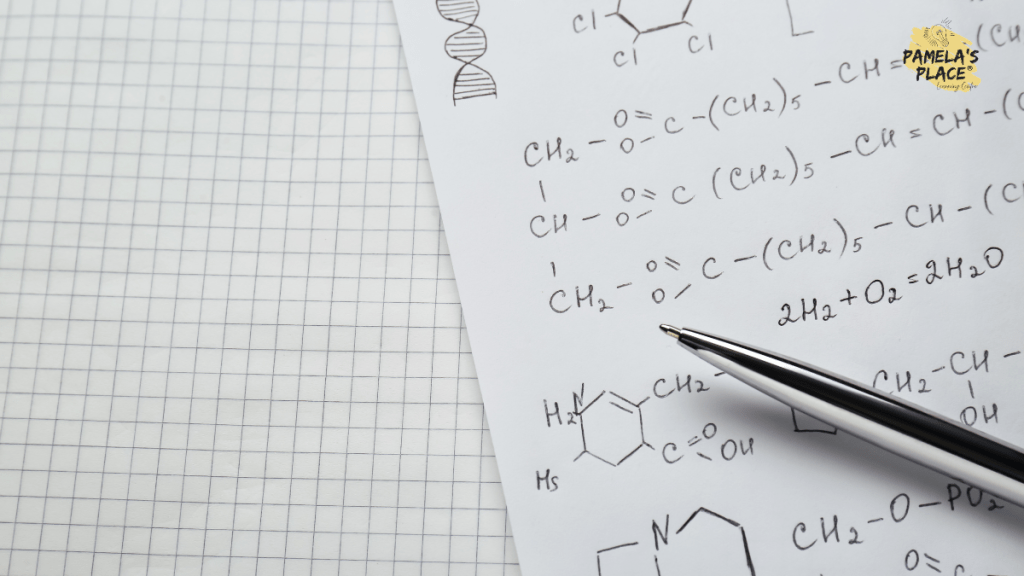
Attempting varied question types surfaces mistakes that content review alone won’t reveal — a student can know a topic’s content perfectly and still lose marks because they’ve never practised a data-response question in that format before.
Checklist:
[ ] Complete questions from every topic, not just your stronger ones
[ ] Attempt both structured and multiple-choice formats regularly
[ ] Include at least one application-based question per revision session
Step 4: Review Your Mistakes Carefully
Marking a practice paper is only half the work. The learning happens in the review — mistakes reveal misconceptions and gaps that a correct-answer checklist alone won’t show.
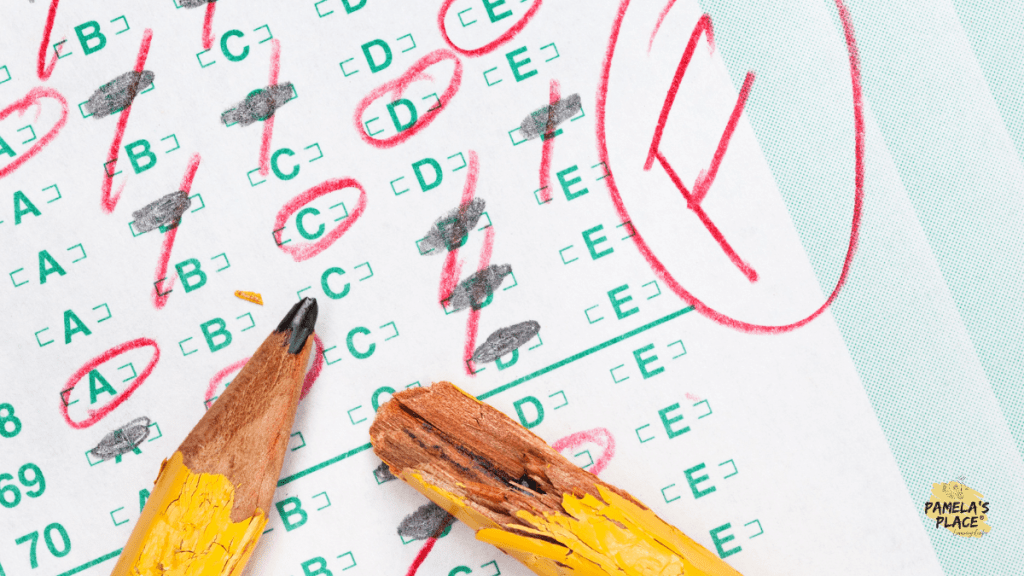
Instead of just checking the right answer, ask why the mistake happened. Was it a misunderstood concept, a misread question, or poor time allocation? These three causes need three completely different fixes, so lumping them together as “I got it wrong” wastes the diagnostic value of the mistake.
Checklist:
[ ] Keep a running error log, not just a pile of marked papers
[ ] Categorise each mistake: conceptual, careless, or time-related
[ ] Reattempt every incorrect question after reviewing it, not just the ones you got most wrong
Step 5: Strengthen Your Answering Technique
Knowing the content is necessary but not sufficient — presenting it correctly is a separate, learnable skill. Many students lose marks by overlooking command words, giving incomplete explanations, or answering only part of a multi-part question.
Command words like “describe,” “explain,” “compare,” and “suggest” each demand a genuinely different type of answer, and misreading them is one of the most common, most avoidable sources of lost marks in both subjects. Our O-Level Biology Tips to Score A1 and O-Level Chemistry Tips to Score A1 guides go deeper into subject-specific answering technique than this checklist covers.
Checklist:
[ ] Practise writing complete, multi-part answers, not just single-sentence responses
[ ] Underline or note the command word before answering every question
[ ] Compare your answers against a mark scheme, not just a model answer, where available
Step 6: Revise Biology and Chemistry Differently
Both fall under “Science,” but they reward different skills, so using the same revision method for both is one of the most common inefficiencies students fall into.

Biology rewards understanding processes and relationships, expressed with precise scientific terminology — concept maps and diagrams that show how topics connect to each other tend to help more here than in Chemistry, since Biology’s difficulty is largely about content volume and precise recall rather than calculation.
Chemistry rewards applying concepts to unfamiliar scenarios and working through calculations methodically — practising varied application questions matters more here than reviewing notes repeatedly, since Chemistry’s difficulty sits in transferring understanding to new situations, not in remembering more facts. Our Biology vs Chemistry difficulty comparison goes deeper into exactly how these two subjects differ, if you want the full picture before building your revision plan.
Checklist:
[ ] Use diagrams and concept maps for Biology topics
[ ] Practise calculations and application questions specifically for Chemistry
[ ] Weight your revision time toward your weaker subject, not split evenly by default
Step 7: Build Regular Review Sessions
Revising a topic once and assuming it’s mastered is one of the most common — and most avoidable — planning mistakes. Information sticks better when revisited across several weeks rather than crammed once and left alone until the exam.
Scheduling deliberate review sessions also helps connect ideas across chapters that were originally taught separately, which is exactly the kind of cross-topic linking that structured exam questions reward.
Checklist:
[ ] Revisit older topics on a rolling basis, at least once every few weeks
[ ] Mix previously studied chapters into current revision sessions, don’t silo by “done”
[ ] Test yourself without notes before assuming a topic is genuinely secure
Step 8: Protect Your Wellbeing
Revision works best with a real balance between study and rest. Long unbroken hours reduce concentration and make new information harder to retain — this isn’t a soft add-on, it’s a practical effectiveness issue.
Sufficient sleep, regular breaks, and a sustainable daily routine directly affect how much of your revision actually sticks, not just how it feels day to day.
Checklist:
[ ] Protect sleep, especially in the final weeks before exams
[ ] Build short breaks into every study session, not just at the end of the day
[ ] Keep a routine that’s sustainable for months, not just survivable for one week
Revision Techniques Explained
The checklist above tells you what to do; here’s the reasoning behind why these specific techniques work, so you can adapt them rather than follow them mechanically.
Active recall means testing yourself on information rather than re-reading it. Closing your notes and writing out everything you remember about enzyme structure, then checking what you missed, embeds information far more effectively than reading the same page five times — because retrieval, not exposure, is what strengthens memory.
Spaced repetition means revisiting a topic at increasing intervals — a day later, then a week later, then a month later — rather than studying it intensively once and moving on. This directly counters the “forgetting curve,” the well-documented pattern where newly learned information fades fastest in the first few days after learning it. A topic revised once in March and never touched again is largely forgotten by the exam in October; the same topic touched briefly four or five times across the same period sticks.
Interleaving means mixing topics within a study session rather than blocking all your time on one topic before moving to the next. It feels less efficient in the moment — switching between genetics and organic chemistry can feel disjointed — but it more closely mirrors how exam papers actually test you, since real papers don’t group all the “Biology transport questions” together and warn you a Chemistry question is coming.
Dual coding means pairing written notes with a visual — a diagram, flowchart, or concept map — rather than relying on text alone. This matters more for Biology than Chemistry, since Biology’s processes (the nitrogen cycle, the menstrual cycle, enzyme action) are inherently sequential and spatial, and a diagram often reveals a gap in understanding that a written definition can paper over.
Recommended Revision Resources
A checklist is only as useful as what you use to work through it. A few categories worth having on hand, rather than specific brand recommendations:
-
- A syllabus-aligned assessment book for topical practice questions with worked solutions, so you can self-mark and identify exactly where an answer fell short of full marks.
-
- Past-year O-Level papers, worked under timed conditions in the final 1–2 months before exams — these remain the single closest approximation of the real exam format and command-word style.
-
- A physical or digital error log, kept consistently rather than recreated per subject or per week, so patterns across months become visible rather than resetting with every new notebook.
-
- Diagram-based summary sheets for Biology topics specifically, built by the student rather than copied from a textbook — the act of building the diagram is where most of the retrieval-practice value comes from, more than the finished sheet itself.
A Suggested Revision Timeline
For students without an existing plan, here’s a rough starting structure — adjust based on how much content is already covered:
| Timeframe | Focus |
| 3–4 months before exams | Complete content review; build conceptual understanding across all topics |
| 2–3 months before exams | Topical practice; identify and log weak areas by category |
| 1–2 months before exams | Timed practice papers; mixed-topic questions that combine multiple chapters |
| Final weeks | Refine answering technique; revisit the error log rather than starting new topics |
A Sample Weekly Schedule
A checklist works best paired with a concrete example. Here’s one way to structure a week during the topical-practice phase (roughly 2–3 months before exams) for a student taking both Biology and Chemistry:
| Day | Focus | Activity |
| Monday | Biology — content | Review one topic group; build a concept map connecting it to related topics |
| Tuesday | Chemistry — content | Review one topic group, starting from mole concept if not yet secure |
| Wednesday | Biology — practice | Structured and data-based questions on Monday’s topic |
| Thursday | Chemistry — practice | Application and calculation questions on Tuesday’s topic |
| Friday | Mixed review | Revisit one older topic from each subject; update the error log |
| Saturday | Timed practice | One past-year section under exam timing, either subject |
| Sunday | Rest / light review | Skim error log only; no new content |
This is a starting template, not a fixed rule — the point is alternating subjects within the week (not devoting entire weeks to one subject) and building in a fixed review day rather than letting older topics fade. Adjust the ratio toward whichever subject is weaker, per Step 6 above.
Signs Your Revision Plan Isn’t Working
A checklist only helps if it’s actually catching problems early. A few signs worth watching for partway through a revision cycle:
You’re completing checklist items but scores aren’t moving. This usually means Step 4 (mistake review) is being skipped or done superficially — ticking off “reviewed mistakes” without actually categorising why each one happened rarely changes the next paper’s outcome.
One subject is consistently getting less time than planned. If Chemistry keeps getting pushed to “tomorrow” week after week, the schedule isn’t the problem — it usually signals the subject feels harder to start, which is worth naming directly rather than continuing to reschedule around it.
Content review keeps expanding instead of shrinking. If Step 1 still isn’t finished two months in, the content-review phase has likely become a way to avoid moving into practice, which is where most of the actual exam-relevant learning happens.
Error log entries repeat the same category week after week. A recurring “careless reading” or “misread command word” pattern that isn’t shrinking over time is a sign the fix needs to be more deliberate than “be more careful next time” — this is exactly the kind of pattern a tutor can usually spot and correct faster than a student working alone.
How Pamela’s Place Supports Structured Revision
At Pamela’s Place, revision isn’t left to students to structure alone. O-Level Biology and O-Level Chemistry lessons build topic sequencing, error-log habits, and command-word practice into the term, rather than assuming students will build these habits independently close to exams. Classes run in small Omakase groups capped at 7 students, so a tutor can see exactly which stage of this checklist each student is stuck on — whether that’s content, question exposure, or technique — rather than treating “more practice” as a one-size-fits-all fix.
These same habits carry forward directly into JC — students who build a genuine error log and topic-sequencing routine at O-Level tend to adapt faster to A-Level demands than those relying on last-minute cramming. If Chemistry is continuing into JC1, our H2 A-Level Chemistry Revision Guide picks up exactly where this checklist leaves off.
O-Level Science Revision FAQs
1. When should I start my O-Level Science revision?
Ideally 3–4 months before exams, so there’s enough time to complete content review, build topical practice, and revisit weak areas before the final timed-practice phase.
-
- Starting earlier reduces the need for last-minute cramming, which doesn’t build lasting retention.
-
- A late start doesn’t mean giving up on structure — it means compressing the same stages, not skipping them.
2. How often should I revise Science each week?
Consistency matters more than duration — regular sessions throughout the week outperform occasional long study marathons.
-
- Both Biology and Chemistry should appear in the schedule every week, not alternating weeks.
-
- Short, focused sessions with a clear topic target beat open-ended “study science” blocks.
3. Should I revise Biology and Chemistry on the same day?
Yes, provided the schedule stays balanced — many students alternate between the two within a session to maintain focus and avoid fatigue on either subject.
-
- Switching subjects mid-session can actually help concentration, rather than hurt it.
4. Are practice papers enough on their own?
No — practice papers need to be paired with content review, mistake-log analysis, and targeted revisits to weak topics for the practice to actually translate into improvement.
-
- Completing papers without reviewing why mistakes happened wastes most of their diagnostic value.
5. What’s the single most important part of this checklist?
Following it consistently. A realistic, moderate plan that’s actually completed every week outperforms an ambitious plan that gets abandoned after ten days.
-
- Pick the version of this checklist you can sustain for months, not the most intense version you can manage for one week.
6. How is revising for Pure Science different from Combined Science?
The core techniques on this checklist — active recall, spaced repetition, error logging — apply equally to both, but Pure Science students (like those taking Biology 6093 and Chemistry 6092 separately) go deeper into each topic than Combined Science students covering both disciplines within one combined subject.
-
- Pure Science students generally need more revision time per topic, but face less breadth overall than a Combined Science student splitting attention across two disciplines and a shared Paper 5.
-
- If you’re still deciding between tracks rather than already committed to Pure Science, our O-Level Science guide to Pure vs Combined covers that earlier decision in full.
7. Does active recall work for Biology, given how much content there is?
Yes — arguably more than for Chemistry, since Biology’s difficulty is largely about retaining and precisely recalling a wide range of terms and processes, which is exactly what active recall is best at strengthening.
-
- Re-reading notes feels productive for Biology’s content volume but is one of the least effective methods for actually retaining it long-term.
8. My child has left revision late — is a checklist still useful?
Yes, though the timeline compresses rather than skips stages — content review still needs to happen before timed practice adds value, even if each stage gets less time than the ideal 3–4 month schedule.
-
- A compressed but structured plan still outperforms an unstructured scramble through past papers with no content review first.
9. Does this checklist apply to IP students too?
The core structure applies, but IP students don’t sit O-Levels, so there’s no external checkpoint forcing this kind of organised revision at the same point in the timeline — the same content-review, topic-sequencing, and error-log habits still matter, just without the exam deadline creating urgency around them.
-
- Building the habit early matters more for IP students precisely because there’s no O-Level exam to surface a disorganised approach before it becomes a bigger problem at JC.
-
- See our IP Chemistry tuition page for how this transition is handled for IP-track students specifically.
