
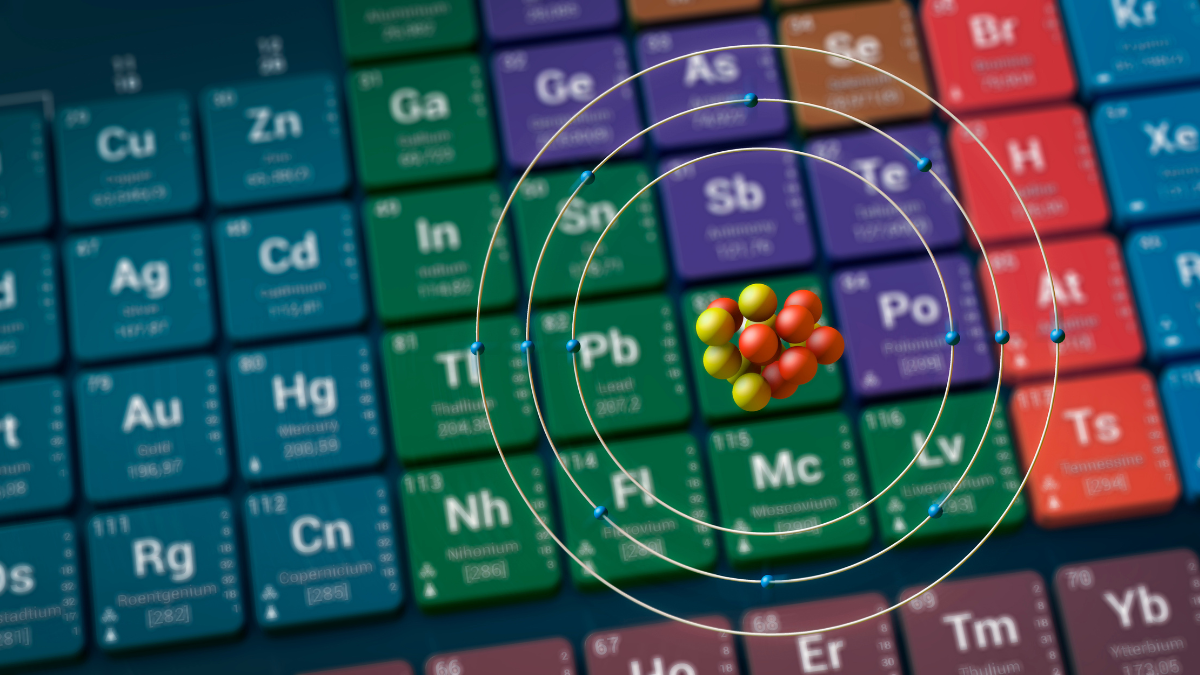
Quick answer: The H2 Chemistry Data Booklet is the official reference document issued in the theory papers for Singapore’s A-Level Chemistry (syllabuses 9476 and, for 2026, the outgoing 9729). It supplies constants, tables, and the Periodic Table — but not the formulas or methods needed to use them, which students must still know. This guide breaks down all ten sections with worked examples, then covers exam technique for using the booklet quickly and accurately.
Knowing where to find information in the H2 Chemistry Data Booklet saves time and reduces memory load during the exam — but only for students who already know how each table connects to a method. Students who only open the booklet when they’re stuck tend to lose minutes searching without knowing how to apply what they find. This is one of the areas covered in H2 Chemistry tuition at Pamela’s Place, where data-based questions are practised alongside the concepts they test.
A note on syllabus codes: Singapore-Cambridge H2 Chemistry is transitioning from 9729 to 9476 in 2026, with 9729 being examined for the last time this year. Both syllabuses use the same 2026-dated Data Booklet, so this guide applies to whichever code appears on your registration — but always revise against the syllabus document that matches your cohort, since content coverage can differ slightly during a transition year. This is the same kind of continuity gap covered in our Sec 4 Chemistry Tuition guide, where foundations built one level down carry forward — or expose gaps — at the next.
For syllabus 9476, candidates receive the official Data Booklet for the theory papers. It includes the Periodic Table, constants, ionisation energies, bond energies, electrode potentials, spectroscopy data, qualitative analysis notes, and other reference tables. The full booklet isn’t used in the practical exam, though the Qualitative Analysis Notes are made available separately for Paper 4.
Table of Contents
What Is the H2 Chemistry Data Booklet?
The H2 Chemistry Data Booklet is the official reference document provided during the theory papers. It’s sometimes called an A Level Chemistry Data Booklet, Chemistry Formula Booklet, or H2 Formula Sheet — names that can set the wrong expectation, because the booklet is not a complete formula sheet.

It gives students the values and reference data needed to solve questions. In most cases, students must still remember the equation, select the right value, convert units, and explain what the result means. Knowing the molar gas constant is listed doesn’t help if a student can’t recognise when pV = nRT applies.
The 2026 booklet has ten main sections:
- Important values, constants and standards
- Ionisation energies of selected elements
- Bond energies
- Standard electrode potentials and redox potentials
- Atomic and ionic radii
- Typical proton chemical-shift values
- Characteristic infrared absorption frequencies
- The orienting effect of groups in aromatic substitution
- Qualitative Analysis Notes
- The Periodic Table of Elements
Under 9476, Paper 2 includes compulsory data-based questions, and Papers 2 and 3 test how well students apply booklet data across topics — so speed and accuracy in navigating it directly affect the score. The goal isn’t just finding a number; it’s deciding whether the data is relevant, using it correctly, and linking the answer back to the chemistry.
1. Important Values, Constants and Standards
This section holds the constants used in gas, electrochemistry, stoichiometry, energetics, and atomic-level calculations. Students don’t need to memorise every value, but should recognise the symbol, unit, and topic linked to each one.
Molar Gas Constant, R — R = 8.31 J K⁻¹ mol⁻¹, used with pV = nRT. Pressure must be in pascals, volume in cubic metres, temperature in kelvin.
Worked example: A gas occupies 500 cm³ at 298 K and 1.01 × 10⁵ Pa. Convert 500 cm³ to 5.00 × 10⁻⁴ m³ first. n = pV ÷ RT = [(1.01 × 10⁵)(5.00 × 10⁻⁴)] ÷ [(8.31)(298)] = 0.0204 mol A common mistake is substituting dm³ or cm³ directly — the equation is right, but inconsistent units make the answer wrong.
Molar Volume of Gas, Vₘ — 22.7 dm³ mol⁻¹ at s.t.p., 24 dm³ mol⁻¹ at r.t.p. Always check which conditions the question states before choosing one.
Worked example: 4.80 dm³ at r.t.p. → n = 4.80 ÷ 24 = 0.200 mol
Faraday Constant, F — F = 9.65 × 10⁴ C mol⁻¹, the charge carried by one mole of electrons, used in electrolysis after total charge is found (Q = It).
Worked example: A current passes 1930 C through Cu²⁺ ions. Amount of electrons = 1930 ÷ 96 500 = 0.0200 mol. Since Cu²⁺ needs two electrons per copper atom, the amount of Cu = 0.0100 mol. Using Aᵣ(Cu) = 63.5, mass deposited = 0.635 g.
Avogadro’s constant, L — L = 6.02 × 10²³ mol⁻¹, converts between amount in moles and number of particles (N = nL). The booklet uses L rather than Nₐ.
Worked example: 0.250 mol of molecules → (0.250)(6.02 × 10²³) = 1.51 × 10²³ molecules.
Specific Heat Capacity of Water, c — c = 4.18 J g⁻¹ K⁻¹, is used in calorimetry when the solution is treated as water. A temperature change has the same numerical value in °C and K.
Worked example: 100 g of solution rises 6.0 K → q = (100)(4.18)(6.0) = 2508 J (2.51 kJ). From here, decide the sign of the enthalpy change and divide by the amount of reactant if a molar value is asked for.
Ionic Product of Water, Kw — Kw = 1.00 × 10⁻¹⁴ mol² dm⁻⁶ at 298 K, linking [H⁺] and [OH⁻]. This value applies specifically at 298 K — don’t assume it holds if a question changes the temperature.
Planck constant, speed of light, and particle masses are also listed. Their presence doesn’t mean every question needs them — identify the topic and equation first, then select the constant.
2. Ionisation Energies
This section lists the first four ionisation energies of selected elements, useful for spotting periodic trends, explaining electronic configurations, and identifying large jumps between successive values. A large jump signals that the next electron comes from a lower shell closer to the nucleus, revealing the number of valence electrons.
Worked example: Magnesium’s first and second ionisation energies (736, 1450 kJ mol⁻¹) are followed by a much larger third (7740 kJ mol⁻¹). The jump after the second electron supports two valence electrons and the common Mg²⁺ ion.
Don’t stop at “higher nuclear charge” — a complete explanation usually needs nuclear charge, shielding, distance from the nucleus, and electronic configuration together, with the numbers as supporting evidence.
3. Bond Energies
This section separates exact bond energies (diatomic molecules) from average bond energies (polyatomic molecules) — averages are estimates because bond strength varies with molecular environment.
ΔH ≈ Σ(bonds broken) − Σ(bonds formed). Breaking bonds needs energy (positive); forming bonds releases it (subtracted).
Worked example: H₂ + Cl₂ → 2HCl ΔH = [436 + 244] − [2(431)] = −182 kJ mol⁻¹ (exothermic)
The two most common errors: reversing the calculation (formed minus broken) and forgetting stoichiometric coefficients when counting bonds.
4. Standard Electrode Potentials and Redox Potentials
Reduction half-equations and their standard potentials at 298 K, listed both alphabetically and by redox series (useful for comparing oxidising power).
E°cell = E°cathode − E°anode. The more positive potential stays as reduction (cathode); the other is reversed (oxidation).
Worked example: Zn²⁺/Zn (−0.76 V) and Cu²⁺/Cu (+0.34 V): E°cell = +0.34 − (−0.76) = +1.10 V. A positive E°cell supports thermodynamic feasibility under standard conditions — it doesn’t guarantee a fast reaction, since kinetics can still limit what’s observed.
ΔG° = −nFE°cell. For this cell, n = 2: ΔG° = −(2)(9.65 × 10⁴)(1.10) = −2.12 × 10⁵ J mol⁻¹ = −212 kJ mol⁻¹
Never multiply an E° value by a stoichiometric coefficient — it’s an intensive property. Balance electrons in the half-equations instead, and use the listed E° values unchanged.
5. Atomic and Ionic Radii
Supports explanations of periodicity, ionic size, lattice energy, and transition-element behaviour. (For a full treatment of periodic trends — atomic radius, ionisation energy, electronegativity across Period 3 and Groups 2/17 — see our complete Periodic Table guide for H2 Chemistry.)
Across a period, atomic radius generally decreases (rising nuclear charge, same shell). Down a group, it increases (extra shell added). Cations are smaller than their parent atoms; anions are larger, due to changes in electron-electron repulsion and nuclear attraction.
Worked example: Na⁺ (0.095 nm) vs Mg²⁺ (0.065 nm) — both are isoelectronic, but Mg²⁺’s higher nuclear charge pulls its electrons in more tightly.
6. Typical Proton Chemical-Shift Values
Typical ¹H NMR chemical-shift ranges relative to TMS connect a signal to the hydrogen’s chemical environment. These are evidence, not exact answers — shifts vary with surrounding structure, and O–H/N–H signals also vary with solvent and concentration.
Worked example: In chloroethane (CH₃CH₂Cl), the CH₂ next to chlorine falls in the 3.2–4.0 ppm region; the terminal CH₃ sits in the alkane region, 0.9–1.7 ppm. Combine shift, relative peak area, splitting pattern, and other structural clues before proposing a structure — the table alone isn’t enough.
7. Characteristic Infra-Red Absorption Frequencies
Lists absorption ranges, associated functional groups, and typical peak strength. Strong students read the pattern of peaks rather than a single value.
Worked example: A strong carbonyl absorption plus a very broad O–H absorption (roughly 2500–3000 cm⁻¹) points to a carboxylic acid. A carbonyl peak without that broad O–H could be an aldehyde, ketone, ester, or amide — more evidence is needed. Peak absence matters too: a proposed alcohol with no broad O–H absorption should be reconsidered.
8. Orienting Effect in Aromatic Substitution
Shows how an existing ring substituent directs an incoming electrophile — position is controlled by the group already on the ring, not the incoming group.
- Alkyl, OH, OR, NH₂, NHR, NR₂, NHCOR → direct to 2- and 4-positions, activate the ring
- Cl, Br, I → direct to 2- and 4-positions, deactivate the ring
- CHO, COR, CO₂H, CO₂R, NH₃⁺, NO₂, CN → direct to 3-position, deactivate the ring
Worked example: Nitration of methylbenzene is directed mainly to the 2- and 4-positions by the existing alkyl group. Consider steric effects and relative product amounts if the question asks for a major product.
9. Qualitative Analysis Notes
Covers reactions of aqueous cations with NaOH and aqueous ammonia, anion reactions, gas tests, halogen colours, and selected organic functional-group tests. Read the correct reagent column and check three things: precipitate colour, whether it dissolves in excess reagent, and the final solution colour — these distinguish ions that start out looking similar.
Worked example: Cu²⁺ gives a pale-blue precipitate with NaOH, insoluble in excess. With aqueous ammonia, it gives a blue precipitate that dissolves in excess to a dark-blue solution — stating only “blue precipitate” is an incomplete answer.
For anions and gases, state reagent, condition, and observation precisely — “turns limewater cloudy” is weaker than “forms a white precipitate with limewater, which dissolves in excess CO₂” where that extra detail is relevant. These same observation standards carry into the practical exam — see our O-Level Chemistry Practical (Paper 3) guide for how examiners mark qualitative analysis in the lab itself.
10. The Periodic Table of Elements
Gives proton numbers and relative atomic masses, supporting electronic configurations, mole calculations, empirical/molecular formulae, and trend explanations. Use the printed Aᵣ values rather than rounded values from memory — using Aᵣ(Mg) = 24 instead of 24.3 can shift a final answer outside the accepted significant figures.
The Periodic Table doesn’t provide oxidation states, organic conditions, or trend explanations — those still require subject knowledge. (See the linked Periodic Table guide above for the full trends discussion.)
Formulae Students Must Still Know
The booklet provides constants and tables, but these relationships must be recalled or constructed:
- Amount from mass: n = m ÷ M
- Concentration: c = n ÷ V
- Ideal gas: pV = nRT
- Gas amount at stated conditions: n = V ÷ Vₘ
- Particles: N = nL
- Heat change: q = mcΔT
- Bond energy estimate: ΔH ≈ Σ(broken) − Σ(formed)
- Gibbs free energy: ΔG° = ΔH° − TΔS°
- Kc / Kp expressions from the balanced equation
- Acids: pH = −lg[H⁺], Kₐ = [H⁺][A⁻] ÷ [HA], pKₐ = −lgKₐ
- Bases: Kᵦ = [BH⁺][OH⁻] ÷ [B], pKᵦ = −lgKᵦ
- Water: Kw = [H⁺][OH⁻], and Kw = KₐKᵦ for a conjugate pair
- Ksp from the dissolution equation
- E°cell = E°cathode − E°anode
- ΔG° = −nFE°cell
- Q = It, n(e⁻) = Q ÷ F, F = Le
This is why “H2 Formula Sheet” is a misleading label — the data is provided, but the method isn’t. Students need a separate revision system for formula recall, unit conversion, and question selection — our H2 A-Level Chemistry Revision Guide covers exactly that system and pairs well with the booklet-specific practice in this article.
How to Use the Data Booklet During an Examination
- Identify the topic — gases, energetics, electrochemistry, spectroscopy, periodicity, or qualitative analysis.
- Write the equation first, before looking for values — this stops students from grabbing data just because symbols look familiar.
- Locate the exact table and read the heading carefully — check whether a value is exact, average, typical, or given under standard conditions.
- Convert all units before substitution — cm³/dm³/m³, J/kJ, °C/K are the usual traps.
- Show working clearly — a correct final answer with incomplete working is harder to mark and risks losing method marks on an arithmetic slip. This applies well beyond data-based questions; our guide to scoring A1 in O-Level Chemistry breaks down exactly what examiners accept for “calculate,” “explain,” and “describe” command words.
- Interpret the result using chemistry — state what the sign, trend, peak, precipitate, or value means in context.
- Check significant figures and units — the syllabus states inappropriate units or sig figs may be penalised.
Common Data Booklet Mistakes
- Treating the booklet as a substitute for formula recall
- Using 24 dm³ mol⁻¹ without checking if the gas is at r.t.p.
- Substituting cm³ or dm³ directly into pV = nRT
- Calculating bond energies as formed minus broken
- Multiplying E° values when balancing half-equations
- Assuming a positive E°cell guarantees a fast, visible reaction
- Identifying an organic compound from a single spectroscopy peak
- Ignoring whether a precipitate dissolves in excess reagent
- Stating an ionisation-energy trend without explaining nuclear charge, shielding and distance
- Rounding relative atomic masses too early
Most of these come from rushing to the calculator before setting up the chemistry — not from time pressure alone, though poor pacing makes every one of them more likely. Our Chemistry exam time management guide covers how to allocate minutes per mark, so booklet lookups don’t eat into calculation time.
Free Printable H2 Chemistry Data Booklet Summary
Download the printable PDF summary here
| Area | Formula or Data | Final Check |
| Gas calculations | pV = nRT or n = V ÷ Vₘ | Use Pa, m³, K — check s.t.p. vs r.t.p. |
| Particles | N = nL | Atoms, molecules, ions, or electrons? |
| Calorimetry | q = mcΔT | Consistent units; decide sign of ΔH |
| Bond energies | ΔH ≈ Σ broken − Σ formed | Count every bond; apply coefficients |
| Electrode potentials | E°cell = E°cathode − E°anode | Never multiply E° values |
| Electrochemical energy | ΔG° = −nFE°cell | Use balanced electron transfer for n |
| Electrolysis | Q = It, n(e⁻) = Q ÷ F | Convert time to seconds first |
| Aqueous equilibria | Kw = [H⁺][OH⁻] | Confirm the stated temperature |
| Ionisation energies | Trends and large jumps | Support with charge, shielding, distance |
| Bond and ionic radii | Compare like with like | Use charge, shell number, attraction |
| ¹H NMR | Match δ ranges to environments | Combine with integration and splitting |
| Infra-red | Match diagnostic ranges | Use several peaks and key absences |
| Aromatic orientation | Existing group controls position | Separate orientation from activation |
| Qualitative analysis | Reagent, observation, excess behaviour | State colours and final solutions precisely |
| Periodic Table | Printed proton numbers and Aᵣ values | Avoid premature rounding |
How Pamela’s Place Supports H2 Chemistry Revision
At Pamela’s Place, H2 Chemistry revision is built around understanding, application, and exam technique — recognising which data a question needs, recalling the right equation, organising working, and explaining what an answer means chemically. Lessons run in small Omakase groups capped at 7 students, with worked examples, timed data-based practice, and targeted feedback on the mistakes above. The same approach carries through from O-Level Chemistry tuition, so students arrive at JC already comfortable with data-based reasoning rather than meeting it for the first time.
The goal isn’t memorising the booklet page by page — it’s knowing what’s available, what still needs to be remembered, and how to bring both together accurately under exam conditions.
H2 Chemistry Data Booklet FAQs
1. Is the H2 Chemistry Data Booklet provided during the examination?
Yes. Candidates taking syllabus 9476 (and, in 2026, the outgoing 9729) are provided with the Data Booklet, including the Periodic Table, for the theory papers.
- The Qualitative Analysis Notes are made available separately for the Paper 4 practical.
- Bringing a personal copy in is not covered by this guide — follow your admission notice and invigilator instructions.
2. Is the Data Booklet the same as an H2 Formula Sheet?
Not exactly. It provides constants, tables, and reference data, but not every formula, definition, reaction condition, or method needed for H2 Chemistry.
- Equations like pV = nRT or q = mcΔT must still be recalled from memory.
- Organic reaction conditions and mechanisms are not included at all.
3. Do students still need to memorise formulae?
Yes. Key relationships — pV = nRT, q = mcΔT, E°cell = E°cathode − E°anode, Q = It, and the equilibrium/acid/base/electrolysis expressions — are not printed as formulas, only their input values are.
4. Which H2 Chemistry syllabus does this guide cover?
This guide is aligned with the revised Singapore-Cambridge H2 Chemistry syllabus 9476, first examined in 2026, and also applies to the outgoing 9729 syllabus, which will be examined for the last time in the same year.
5. Does the booklet include organic reaction conditions?
No.
- It includes proton chemical-shift ranges, infrared absorption frequencies, aromatic orienting effects, and selected qualitative tests.
- Organic reagents, conditions, mechanisms, and products must still be learned separately.
6. Are all the values in the booklet exact?
No.
- Some values are exact for a specific substance.
- Bond energies for polyatomic molecules are averages, and spectroscopy data are given as typical ranges rather than fixed values.
7. Should students memorise the constants?
Not the numbers themselves — recognise the symbol, unit, and formula linked to each constant so it can be found and applied quickly under time pressure.
8. What’s the best way to revise with the Data Booklet?
Use the official booklet while completing topical and timed practice questions.
- After each question, note which table was used.
- Note which formula had to be recalled from memory.
- Note which unit or interpretation step caused the difficulty.
9. Can the Data Booklet help with data-based questions?
Yes — it provides reference values to compare against unfamiliar data in a question, but students must still analyse the new data, spot patterns, and justify conclusions with chemical principles.
10. What should students do if two spectroscopy ranges overlap?
Combine all available evidence: peak range, appearance, integration, splitting, molecular formula, and any chemical test results, before deciding on a structure.
Curious Where Your Child Stands?
The clearest way to see whether Sec 3 foundations are solid enough for Sec 4 content is to sit in on an actual lesson. Trial lessons at Pamela’s Place run as real classes — small groups of 7, directly above Beauty World MRT (Exit D) — not a separate demonstration session.
Book a trial lesson → No registration fee. All materials included.
