

“Sec 4 Chemistry” and “O-Level Chemistry” refer to the same subject — but a lot of parents search for one term and not the other, usually because it’s the phrase their child’s school uses day to day. If you’re trying to understand what Sec 4 Chemistry actually covers, whether your child is behind, and when tuition makes sense, this guide walks through all three.
Sec 4 Chemistry Is the Second Half of a Two-Year Subject
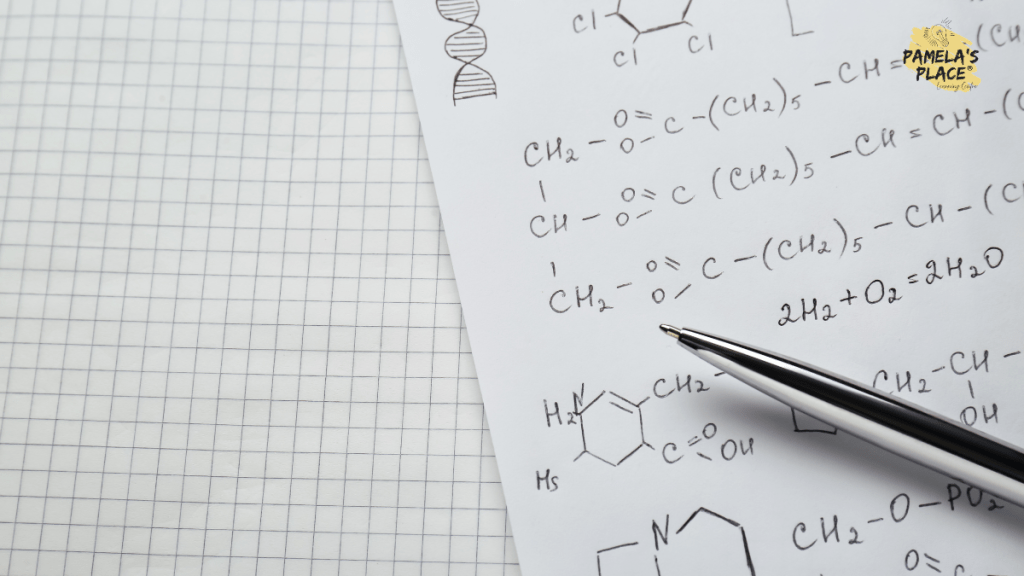
O-Level Pure Chemistry (SEAB syllabus 6092) is a two-year course spanning Secondary 3 and Secondary 4, not two separate subjects. Sec 3 builds the foundational tools — atomic structure, chemical bonding, the mole concept, acids and bases. Sec 4 then layers the harder, more application-heavy content on top: redox reactions, electrochemistry, organic chemistry, and rates of reaction.
This structure matters for one practical reason: Sec 4 difficulty is inherited, not independent. A student who never fully secured the mole concept in Sec 3 doesn’t get a clean slate in Sec 4 — that gap resurfaces immediately in energetics calculations, electrochemistry, and titration questions, all of which assume mole-concept fluency is already automatic.

What Sec 4 Chemistry Actually Covers
Sec 4 Chemistry covers five main topics, all building on Sec 3 foundations:
- Redox reactions and electrochemistry
- Chemical energetics
- Rates of reaction
- Organic chemistry
- Extended qualitative analysis
Here’s what each one actually involves:
Redox Reactions and Electrochemistry. Building on the introductory redox concepts from Sec 3, Sec 4 goes deeper into oxidation states, half-equations, and electrochemical cells — how chemical energy converts to electrical energy and back. This is consistently one of the topics students describe as “clicking late” because it draws on bonding, redox, and the mole concept simultaneously rather than testing any one skill in isolation.
Chemical Energetics: Enthalpy changes, exothermic and endothermic reactions, and energy profile diagrams. Heavily calculation-based, and another topic where Sec 3 mole-concept fluency either pays off immediately or becomes a visible, costly gap.
Rates of Reaction: Factors affecting reaction rate, collision theory, and — increasingly — graph and data interpretation. This is often the first topic where “understanding the content” and “answering the question well” genuinely diverge: a student can understand collision theory correctly and still lose marks by misreading a rate graph or failing to link an observation back to the underlying theory explicitly.
Organic Chemistry: Hydrocarbons, alcohols, and carboxylic acids are introduced properly in Sec 4, after only a light touch (if any) in Sec 3. This topic rewards pattern recognition — once a student sees how functional groups determine reactivity, organic chemistry questions become far more predictable than they first appear.
Qualitative Analysis (Extended): Sec 3 introduces ion and gas identification tests; Sec 4 expects faster, more independent recall, since this feeds directly into the Paper 3 practical assessment.
The Exam Format: Three Papers, One Grade
O-Level Pure Chemistry is assessed across three papers, reported as a single combined grade:
- Paper 1 (Multiple Choice): 40 questions, 1 hour
- Paper 2 (Structured & Free Response): The heaviest-weighted paper, mixing compulsory structured questions with free-response sections that often require connecting two or three topics at once — our guide to answering structured Chemistry questions covers this in more depth
- Paper 3 (Practical): 40 marks (20% of the total grade), testing titration technique, qualitative analysis, and experimental planning — skills that require hands-on rehearsal, not just reading about the method. Our full Paper 3 guide covers titration precision, QA, and planning in detail.
Paper 3, in particular, catches students off guard. It’s worth a fifth of the final grade, but because it happens in a lab rather than at a desk, it’s easy to under-prepare for it relative to how much it actually counts.
Is Sec 4 Chemistry Harder Than Sec 3?
In terms of raw content, yes — but the more accurate way to think about it is that Sec 4 is harder because it’s cumulative, not because individual topics are inherently more difficult than Sec 3 ones:
- Redox and electrochemistry aren’t conceptually impossible — they’re difficult specifically for students whose Sec 3 mole-concept and bonding foundations were shaky to begin with
- Students with solid Sec 3 foundations typically describe Sec 4 as faster-paced, not fundamentally harder
- The jump in difficulty is concentrated in how many concepts a single question expects students to connect at once, not in any one topic being disproportionately hard
This is also why “when should tuition start” doesn’t have a single universal answer — it depends more on how solid a student’s Sec 3 foundations are than on the calendar date.
When Should Sec 4 Students Start Tuition?
There’s no single universal answer, but timing generally follows one of three patterns:
- If Sec 3 foundations were solid: many students don’t need tuition until partway through Sec 4, once redox, electrochemistry, or organic chemistry starts feeling genuinely unfamiliar rather than just fast-paced
- If Sec 3 was already a struggle: starting at the beginning of Sec 4 — or during the Sec 3 year-end holidays — gives more room to shore up mole concept and bonding before Sec 4 content builds directly on top of them
- Before Prelims: regardless of how the year has gone, many families find the months before Preliminary Examinations the point where structured revision and exam technique correction matter more than new content coverage
Starting before difficulties compound is consistently more effective than starting once a student is already several topics behind. If your child is at the “before Prelims” stage specifically, our Chemistry revision strategy guide lays out a structured study plan for that window.
How Pamela’s Place Approaches Sec 4 Chemistry
At Pamela’s Place, Sec 3 and Sec 4 Chemistry are taught as a continuous two-year arc, not treated as separate blocks. Because classes are capped at 4 to 6 students, a tutor can track which specific Sec 3 foundations a student is carrying forward — solidly or shakily — into Sec 4 content, rather than teaching Sec 4 topics as if every student arrived with identical preparation.
This matters most for the topics that depend most heavily on Sec 3 groundwork: energetics and electrochemistry calculations lean on mole concept fluency built the year before, and a tutor who’s taught a student since Sec 3 can spot exactly where that foundation needs reinforcing rather than re-teaching content the student has already mastered. Our O-Level Chemistry tuition programme is built around this continuity, covering the full Sec 3–4 arc rather than treating each year in isolation.
For a closer look at exam-specific preparation once the full syllabus is in view, our guide to scoring A1 in O-Level Chemistry and our breakdown of the Chemistry marking scheme cover the answering-technique side of Sec 4 preparation in more depth.
Looking Ahead: What Comes After Sec 4 Chemistry
For students continuing to Junior College, the same pattern repeats one level up — H2 Chemistry builds directly on O-Level foundations the same way Sec 4 builds on Sec 3, and gaps carried forward tend to resurface again rather than disappear. Our H2 Chemistry syllabus guide breaks down what JC1 and JC2 actually cover, and our A-Level Chemistry tuition programme is built around that same JC1-to-JC2 continuity for students making that transition. Students on the IP track follow a different timeline but face a similar transition — our IP Chemistry tuition page covers how that syllabus bridges into JC H2 Chemistry.
Frequently Asked Questions
1. Is Sec 4 Chemistry the same as O-Level Chemistry?
Yes. “Sec 4 Chemistry” and “O-Level Chemistry” describe the same subject:
- O-Level Pure Chemistry (SEAB syllabus 6092) is a two-year course spanning Sec 3 and Sec 4
- The O-Level examination is sat at the end of Sec 4, not partway through
- Schools and students commonly use “Sec 4 Chemistry” in everyday conversation; “O-Level Chemistry” is the more formal/official term
2. What topics are covered in Sec 4 Chemistry specifically?
Sec 4 builds on Sec 3’s foundations with five main topics:
- Redox reactions and electrochemistry
- Chemical energetics (enthalpy, exothermic/endothermic reactions)
- Rates of reaction (kinetics)
- Organic chemistry (hydrocarbons, alcohols, carboxylic acids)
- Extended qualitative analysis (ion and gas identification)
3. Why does Sec 4 Chemistry feel so much harder than Sec 3?
It’s largely cumulative difficulty rather than individually harder topics:
- Sec 4 content assumes Sec 3 foundations — particularly the mole concept and bonding — are already secure
- Gaps from Sec 3 don’t disappear; they resurface directly in Sec 4 topics like energetics and electrochemistry
- Students with solid Sec 3 foundations typically experience Sec 4 as faster-paced rather than fundamentally harder
4. When should my child start Sec 4 Chemistry tuition?
Timing depends more on how solid Sec 3 foundations were than on a fixed date:
- Shaky Sec 3 foundations: starting early in Sec 4, or during the preceding year-end holidays, gives time to shore up gaps before Sec 4 content builds on top of them
- Solid Sec 3 foundations: many students don’t need support until a specific Sec 4 topic — often redox, electrochemistry, or organic chemistry — becomes genuinely difficult
- Regardless of starting point, most families find the months before Preliminary Examinations the point where exam technique correction becomes as important as content coverage
5. How much does the practical exam (Paper 3) count for in O-Level Chemistry?
Paper 3 is worth 40 marks, roughly 20% of the total grade. It tests:
- Titration technique
- Qualitative analysis (ion and gas tests)
- Experimental planning
Because it happens in a lab rather than at a desk, it requires hands-on rehearsal rather than pure theory revision — a common reason students under-prepare for it relative to how much it counts.
6. What’s the difference between Sec 3 and Sec 4 Chemistry?
- Sec 3 covers foundational topics: atomic structure, chemical bonding, the mole concept, and acids and bases
- Sec 4 builds directly on these with redox reactions, electrochemistry, chemical energetics, rates of reaction, and organic chemistry
- Sec 4 topics generally assume Sec 3 content is already fluent, not just familiar
7. What are the most common mistakes Sec 4 Chemistry students make?
Four patterns show up repeatedly:
- Treating redox and electrochemistry as unrelated topics, when both are based on the same underlying idea (electron transfer), applied differently
- Memorising organic chemistry reactions instead of recognising the functional-group patterns that make most reactions predictable
- Under-rehearsing Paper 3 practical technique, assuming theory revision alone is sufficient
- Misreading rate-of-reaction graphs — a data-interpretation skill rarely taught explicitly but frequently tested in Paper 2
Our full breakdown of common Chemistry mistakes covers these patterns and others in more depth.
Curious Where Your Child Stands?
The clearest way to see whether Sec 3 foundations are solid enough for Sec 4 content is to sit in on an actual lesson. Trial lessons at Pamela’s Place run as real classes — small groups of 7, directly above Beauty World MRT (Exit D) — not a separate demonstration session.
Book a trial lesson → No registration fee. All materials included.

One thought on “Sec 4 Chemistry Tuition Singapore: What to Expect”