
Finding strong Science tuition near Bukit Timah is straightforward on the surface — the area has no shortage of options. What’s harder is identifying which ones are genuinely built for the demands of Biology and Chemistry at O-Level, IP, and A-Level, rather than simply convenient to get to.
This guide covers what separates effective Science tuition from average Science tuition, what the Bukit Timah corridor specifically demands from students, and what to look for when comparing centres in the area.
For parents specifically evaluating Chemistry options, two related guides go deeper on that subject: the complete guide to Chemistry tuition near you in Singapore covers the broad decision framework, and the guide to Chemistry tuition near King Albert Park MRT covers what students from Hwa Chong, NJC, and ACS(I) specifically need. This article focuses on Science tuition more broadly — the considerations that apply across both Biology and Chemistry.

Why Science Subjects Need Specialised Tuition
Biology and Chemistry are among the most commonly studied subjects at O-Level and A-Level in Singapore — and among the most commonly misunderstood in terms of what effective study actually looks like.
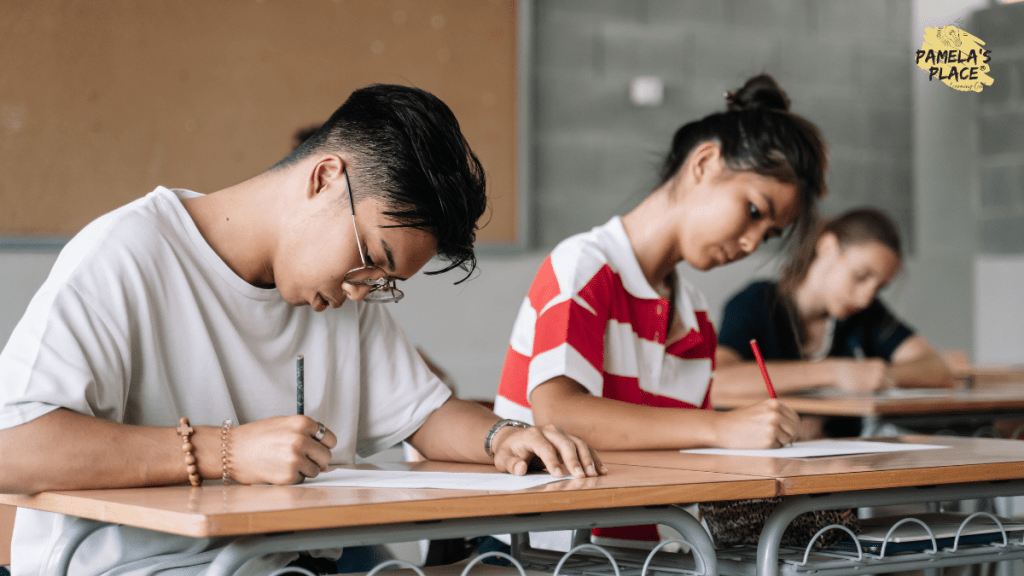
Both subjects carry a significant volume of content. Both require students to apply concepts to unfamiliar scenarios rather than reproduce memorised answers. And both have very specific examination expectations — precise scientific language, structured written responses, and the ability to integrate concepts across topics — that are rarely taught explicitly in school settings where class sizes are large and time is limited.
The result is a pattern that repeats across tuition enquiries every year: students who have studied conscientiously but are still losing marks they don’t understand, on questions they feel they should be able to answer. The problem is usually not understanding — it’s application and technique.
What the Bukit Timah Corridor Demands
The schools concentrated along the Bukit Timah corridor — Hwa Chong Institution, National Junior College, ACS (Independent), Methodist Girls’ School, Raffles Girls’ School, and Nanyang Girls’ High School — are among Singapore’s most academically competitive. Science teaching at these schools is rigorous, internal assessments are demanding, and students are competing in a cohort where the baseline is already high.

This creates a specific challenge for Science tuition in the area. A programme calibrated for the average secondary school Biology student is not going to be useful for a JC1 student from Hwa Chong managing H2 Biology and H2 Chemistry simultaneously. A programme designed for mainstream O-Level Chemistry may not address the pace and depth of an ACS(I) IP student’s curriculum.
Science Tuition Near Bukit Timah
Build confidence in O-Level Biology and Chemistry with small-group lessons at Pamela’s Place.
The most important question when evaluating any Science tuition centre near Bukit Timah isn’t location — it’s whether the programme is calibrated for the level of demand your child’s school actually imposes.
Biology Tuition: What Strong Teaching Looks Like
Biology is often underestimated as a subject because it’s perceived as content-heavy but conceptually straightforward. In practice, the examination skills required for A-Level and O-Level Biology are far more specific than most students realise.
- Content management. The Biology syllabus is genuinely large. Students who try to memorise everything without a framework for organising and connecting topics typically hit a ceiling before major exams. Strong tuition builds a conceptual map of the subject — how topics relate to each other, which concepts underpin multiple examination areas, and where to invest revision time strategically.
- Written response technique. Biology examination answers require precision. “The enzyme is denatured” is not the same as “the tertiary structure of the enzyme is disrupted, causing the active site to change shape so the substrate can no longer bind.” The difference between those two answers is often the difference between one mark and three marks. Most school settings don’t have the time to train this skill individually — tuition does.
- Application to unfamiliar scenarios. Both O-Level and A-Level Biology papers regularly present students with novel experimental scenarios and ask them to apply biological principles. Students who have been taught to understand rather than memorise handle these questions significantly better than those who haven’t.
Chemistry Tuition: The Specific Challenges Near Bukit Timah
Chemistry is consistently one of the most requested subjects for tuition among students in the Bukit Timah corridor, for reasons specific to the schools in the area.
- IP Chemistry gaps at JC. Students from HCI and ACS(I) — both IP schools — frequently arrive at JC with surface-level Chemistry knowledge and deeper conceptual gaps. The IP programme moves quickly and emphasises breadth; students can reproduce worked examples but struggle with application questions requiring cross-topic reasoning. These gaps are significantly easier to address before JC begins than after.
- H2 Chemistry at high-performing JCs. NJC and Hwa Chong JC set internal Chemistry papers that are designed to stretch students well beyond minimum A-Level standards. Tuition support that simply re-covers school material is rarely helpful for these students — what they need is deeper engagement with the concepts and application skills the school’s own teaching doesn’t have time to develop individually.
- O-Level Pure Chemistry technique. MGS students and other O-Level Chemistry candidates frequently lose marks on questions they understand due to poor answering technique — imprecise language, incomplete multi-part responses, and misinterpretation of command words. This is fixable, but it requires deliberate practice with structured feedback.
What to Look for in a Science Tuition Centre Near Bukit Timah
- Class size — verify the actual number, not the marketing claim. “Small group tuition” is a term used by centres running groups of 6 and groups of 15. These are not equivalent experiences. With 6 or fewer students, a tutor can monitor every student’s responses in real time and address confusion before it compounds. At 15, the class functions more like a second school session.
- Who teaches — every week, not in theory. Many centres employ multiple tutors and rotate based on availability. The consistency of the teaching relationship matters significantly in Science subjects, where a tutor’s knowledge of an individual student’s specific gaps is built over months, not weeks. Verify that the tutor whose credentials are advertised is the one who teaches the regular classes.
- How students are grouped — by pace, not just level. A Secondary 4 student strong in Biology but weak in Chemistry and a Secondary 4 student with the reverse profile are not in the same place academically, even if they’re in the same school year. Grouping students by learning pace and specific gaps — rather than simply by academic level — produces better outcomes because lessons can be pitched at the right level for the group.
- Whether Biology and Chemistry are taught as connected subjects. At O-Level and A-Level, Biology and Chemistry are examined separately, but the underlying scientific concepts are interconnected — cellular respiration connects to energetics, enzyme kinetics connects to chemical kinetics, and so on. Tuition that treats them as entirely separate subjects misses an opportunity that high-performing students consistently exploit.
Science Tuition at Pamela’s Place: What’s Available
Pamela’s Place offers Biology and Chemistry tuition across three examination tracks near King Albert Park MRT, Bukit Timah:
- O-Level Biology and Chemistry (Secondary 3 and 4) is structured around the GCE O-Level syllabus, with a focus on conceptual understanding, structured written-answer technique, and consistent exam-style practice. More than 90% of students improve by at least two grades. Available as Biology-only, Chemistry-only, or combined.
- IP Biology and Chemistry (Upper Secondary) for students in Integrated Programme schools — Hwa Chong, ACS(I), Raffles Institution — who progress directly toward A-Levels. Lessons are structured to address the pace and depth of the IP curriculum and proactively close the conceptual gaps that typically surface at the JC transition.
- H2 Biology and H2 Chemistry (JC1 and JC2) for students taking A-Level Biology and/or Chemistry at Junior College. Covers the full SEAB H2 syllabus with emphasis on application, cross-topic integration, and free-response examination technique.
- Location: 118 Upper Bukit Timah Rd, #02-20 The LINQ @ Beauty World — within walking distance of King Albert Park MRT (Downtown Line, DT21).
Frequently Asked Questions
1. What is the difference between Biology and Chemistry tuition, and do students need both?
Biology and Chemistry are separate subjects with different content demands, but they share underlying scientific skills:
- Biology tuition focuses on content management across a large syllabus, written response precision, and applying biological principles to unfamiliar experimental scenarios
- Chemistry tuition emphasises conceptual understanding of chemical principles, calculation technique, and cross-topic integration — particularly important for IP and JC students.
- Whether a student needs both depends on their examination choices — JC students taking both H2 Biology and H2 Chemistry benefit significantly from integrated tuition that draws on connections between the subjects.
- O-Level students typically focus on one or the other, depending on whether they are taking Combined Science or Pure Biology and Pure Chemistry.
2. What should I look for in a Science tuition centre near Bukit Timah?
Four factors matter most when evaluating Science tuition in this area:
- Genuine class size — verify the actual number of students per session, not the marketing description; effective small group Science tuition means 6 or fewer students
- Subject-specific calibration — a centre should be specifically structured for O-Level, IP, or H2 Biology and Chemistry, not a generic “Science” programme
- Teaching consistency — the same tutor should teach every lesson throughout the year, not rotating associates, because knowledge of individual student gaps builds over time.
- School calibration — for students from Hwa Chong, NJC, ACS(I), and MGS, the programme should be calibrated for the academic demands of those schools specifically, not just the general syllabus
3. How is Biology tuition different at O-Level, IP, and A-Level?
Each track has distinct demands that require different teaching approaches:
- O-Level Biology (Secondary 3 and 4) — covers foundational concepts across a broad syllabus; the key skills are content organisation, written response structure, and application to seen and unseen scenarios
- IP Biology (Upper Secondary) — moves faster and at greater depth than O-Level; students often develop content familiarity without deep understanding, creating gaps that surface at the JC transition.
- H2 Biology (JC1 and JC2) — requires integration across the full A-Level syllabus, with a strong emphasis on evaluating experimental data, constructing extended written arguments, and applying principles to novel research scenarios.
4. Why do students from IP schools like Hwa Chong and ACS(I) often need Science tuition at JC?
Several factors converge at the IP-to-JC transition:
- Fast IP pace creates gaps — the Integrated Programme covers content quickly and broadly; students develop surface familiarity with concepts without the deep understanding needed for A-Level application questions
- Both H2 Biology and H2 Chemistry begin simultaneously at JC — students taking both subjects face a significant content volume increase from day one of JC1.
- School internal assessments are demanding — Hwa Chong and NJC internal papers are designed to stretch beyond A-Level minimum standards, meaning students need tuition that goes deeper, not just broader.
- Exam technique gaps from IP surface quickly — IP students who haven’t developed structured written answering habits find A-Level free-response questions significantly harder than their content knowledge would suggest
5. What is the best way to improve Biology grades in Singapore?
The most reliable approach combines three elements:
- Conceptual understanding before memorisation — students who understand why biological processes work handle unfamiliar questions far better than those who have memorised definitions and diagrams
- Structured written practice with feedback — Biology marks are consistently lost on technique rather than knowledge; regular practice writing full answers with specific feedback on language precision and response structure is the single most effective intervention for most students.
- Spaced revision across topics — Biology has a large content volume; a revision strategy that revisits each topic multiple times across the year, rather than covering it once and moving on, produces significantly better long-term retention
6. How does small-group science tuition compare to private tutoring for Biology and Chemistry?
Both formats have merit — the right choice depends on the student’s specific situation:
- Private tutoring gives maximum flexibility and one-on-one attention; it works best for students with a specific, isolated gap in one topic or skill area
- Small group tuition at 4 to 6 students preserves most of the individualisation of private tuition while adding the learning benefits of a group — hearing other students’ questions often surfaces gaps the student didn’t know they had
- For Biology and Chemistry specifically, group discussion of application questions and experimental scenarios is genuinely valuable — students learn from each other’s reasoning in a way that private tutoring can’t replicate.
- The key caveat is that “small group” must actually mean small — groups of 10 or more function as mini-classrooms, not personalised tuition.
7. When should a student start Science tuition — and what if they’ve already fallen behind?
Starting earlier is consistently better, but the starting point determines the strategy:
- Beginning of Secondary 3 or JC1 — the ideal entry point; allows the full syllabus to be covered at a sustainable pace with time for revision and examination practice
- Mid-year or late start — still effective, but the priority shifts to identifying and closing the most critical gaps before examinations rather than comprehensive coverage.
- If a student has already fallen behind, the first step is a diagnostic assessment to identify exactly where the gaps are — random revision of topics the student is already comfortable with wastes time that should go toward the specific areas causing mark loss.
- The one scenario where late tuition makes the biggest difference is when a student’s technique is weak, but their content knowledge is reasonable — examination technique can be improved relatively quickly with structured practice.
8. Are there Science tuition options near Bukit Timah that cover both Biology and Chemistry?
Yes — combined Biology and Chemistry tuition is available and, for students taking both subjects, is often more effective than separate sessions with different tutors:
- At Pamela’s Place near King Albert Park MRT, both subjects are taught by the same tutor, which allows explicit connections to be drawn between Biology and Chemistry concepts throughout the year
- The advantage of a shared tutor is that the same teacher understands the student’s gaps across both subjects and can calibrate the pace and focus of each session accordingly.
- Practically, combined tuition is available for O-Level, IP, and H2 tracks — students can take Biology only, Chemistry only, or both
Ready to Find Out If It’s the Right Fit?
Trial lessons at Pamela’s Place are real classes — the same format, content, and pace as ongoing lessons, not promotional showcases. Classes are capped at 4 to 6 students. Slots are limited and fill ahead of major examination periods.
