
Walk into any parent forum in Singapore, and the debate is running somewhere: private tuition or group tuition? One-to-one or small class? What actually produces better results?
The honest answer is that format alone doesn’t determine outcomes — but format has a much bigger impact on learning than most families realise when they’re focused primarily on the tutor’s qualifications and the centre’s claimed results.
For science subjects specifically — Chemistry and Biology at O-Level, IP, and JC level — the research on how students actually learn, combined with what Singapore’s examinations actually test, points clearly in one direction: well-matched small group tuition in Singapore consistently outperforms both large group classes and private tuition for the majority of students.
This article explains why. Not as a marketing claim, but grounded in learning psychology, the specific demands of Singapore science examinations, and what happens inside classrooms when the format is right.
What Singapore Science Examinations Actually Test
Before discussing format, it helps to be precise about what O-Level and A-Level Chemistry and Biology examinations are actually measuring — because the answer shapes everything about what effective tuition needs to do.
Singapore’s SEAB science papers do not primarily test recall. They test:
- Application — using a concept in an unfamiliar context that wasn’t covered in the notes
- Cross-topic integration — answering questions that draw on two or three different areas of the syllabus simultaneously
- Precise scientific communication — expressing understanding in the exact language and structure that mark schemes reward
- Data interpretation and reasoning — analysing graphs, experimental results, or novel scenarios and constructing logical arguments
A student who has memorised their notes thoroughly can still score a C5. A student who has genuinely understood the underlying principles, practised applying them to unfamiliar questions, and learned how to communicate their thinking precisely will score significantly higher — even with less raw content knowledge.
This distinction is critical for understanding why small-group science tuition in Singapore tends to outperform other formats. The skills the exam tests are skills that develop through dialogue, application, and feedback — not through listening to explanations or completing worksheets in isolation.
The Problem With the Two Dominant Formats
Large Group Tuition: Efficient But Structurally Limited
Large group tuition — typically 12 to 25 students in a centre setting — works well for content delivery. An experienced tutor presenting clearly to a room of students can cover the syllabus efficiently, and for students who already have reasonable foundations and just need structured exposure, this format produces adequate results.

The structural limitation is feedback. With 20 students in a room, a tutor cannot monitor who is genuinely following and who has quietly lost the thread. Questions slow everyone else down, so the implicit classroom norm becomes: don’t ask unless it’s urgent. Students who fall behind stay behind because the lesson has moved on.
The other problem is passive learning. Research in educational psychology consistently shows that students retain significantly less from passive listening than from active recall and application. Herman Ebbinghaus’s forgetting curve — one of the most replicated findings in learning science — demonstrated that without active retrieval, students forget up to 70% of new information within 24 hours. Large group tuition, by its nature, produces mostly passive learning experiences.
For science subjects that require application rather than recall, this is a serious constraint. A student who passively absorbed a lesson on Le Chatelier’s principle has not built the understanding needed to apply it to an unfamiliar equilibrium question in an exam paper.
Private Tuition: Personal, but Missing a Key Ingredient
Private one-to-one tuition solves the attention problem entirely. Every minute of the lesson is focused on one student’s specific gaps, pace, and learning style. For students with severe foundational gaps or highly specific weaknesses, this can be the most efficient path to improvement in the short term.
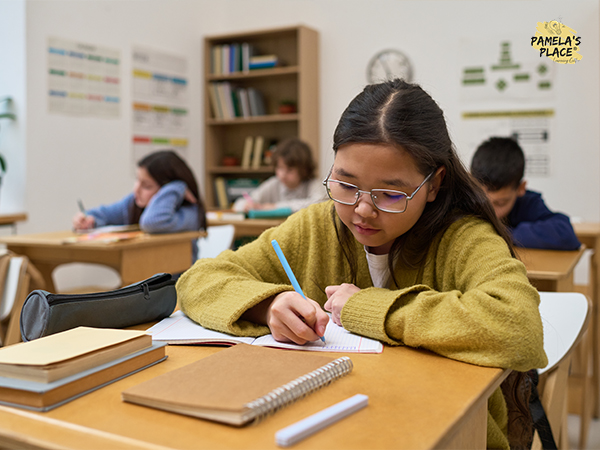
The limitation is less obvious but equally real: learning is partly a social process.
Research by Lev Vygotsky — whose work on the Zone of Proximal Development remains foundational in educational psychology — established that students develop understanding more effectively through interaction with others than through individual study or one-to-one instruction alone. When a student hears a peer ask a question they hadn’t considered, or watches how someone else approaches a problem differently, it prompts the kind of cognitive re-evaluation that deepens understanding.
In private tuition, this simply doesn’t happen. Every question, every misconception, every worked example is filtered through one student’s existing framework. There’s no external perspective to challenge assumptions or reveal blind spots.
There’s also an accountability dynamic that private tuition can unintentionally undermine. When a student knows the lesson revolves entirely around them, the stakes of preparation feel lower — there’s no peer dynamic to prompt self-regulation. In a small group, the implicit accountability of learning alongside others has a measurable effect on consistency.
Why Small Group Tuition Works: The Learning Psychology
Small group science tuition in Singapore — when classes are genuinely small, typically 4 to 6 students — resolves both limitations above simultaneously. This isn’t a compromise between two imperfect formats. It’s a fundamentally different learning environment that activates mechanisms the other formats can’t.
1. Active Retrieval Happens Naturally
In a small group of 4 to 6 students, the tutor can direct questions at specific students, pause to check understanding mid-explanation, and ask students to articulate their reasoning rather than just their answer. This creates continuous active retrieval — the single most evidence-backed technique for durable learning.
Active retrieval works because the act of trying to recall and apply information strengthens memory traces in a way that re-reading or passive listening cannot. Students who are regularly questioned in class — not just given information — develop more stable, accessible knowledge that holds up under exam pressure.
In small group Chemistry or Biology tuition, every lesson is an active retrieval exercise. Students can’t drift. They’re constantly engaged with the material, not just exposed to it.
2. Peer Questions Reveal Blind Spots
One of the most underrated benefits of small group tuition is what happens when a classmate asks a question.
When another student asks about a concept you thought you understood — and you realise you can’t quite follow the tutor’s explanation of why they’re confused — that’s your blind spot being revealed. You thought you knew it. Now you’re not sure. That uncertainty prompts you to re-examine your understanding more carefully than any direct instruction would.

This mechanism simply doesn’t exist in private tuition. It requires the presence of other learners at a similar level, encountering similar questions, from slightly different angles.
For Singapore science students preparing for cross-topic application questions, this exposure to different perspectives and interpretations is directly relevant. The more ways you’ve seen a concept challenged and explained, the more flexibly you can apply it under exam conditions.
3. Accountability Drives Consistency
Educational research consistently identifies accountability as one of the most powerful predictors of academic improvement — more predictive, in some studies, than raw academic ability. Students who feel accountable for their preparation and participation work more consistently and engage more deliberately.
Small group settings create natural accountability. When there are only 5 students in a room, arriving unprepared is noticeable. Contributing to a discussion is expected rather than optional. The social stakes of participation are real — and they produce a more consistent engagement with the subject than either the anonymity of a large class or the low-stakes comfort of private tuition.
For students who struggle with self-motivation or consistency — which is most students, at some point in their secondary or JC journey — this accountability structure is genuinely valuable. It’s not pressure. It’s the kind of natural social expectation that humans have always used to sustain effort.
4. Individual Attention Without Losing Group Dynamics
With 4 to 6 students, a tutor can observe every student’s responses in real time. Confusion is visible. Progress is trackable. A student who writes something subtly wrong on their work can be addressed immediately — not at the end of a worksheet, not in the next lesson, but in the moment.
This level of individual monitoring is impossible in a class of 20. It’s unnecessary in private tuition, where the entire lesson is already focused on one student. In a small group, it exists naturally — and it means that small misunderstandings get corrected before they become large gaps.
For cumulative subjects like Chemistry and Biology, where later topics build directly on earlier ones, this early correction is the difference between a student who keeps pace throughout the year and one who falls progressively further behind.
Group Tuition vs Private Tuition: A Practical Framework
Rather than declaring one format universally superior, here is an honest framework for deciding which is right for your child.
Small Group Tuition Is Likely the Better Fit If:
- Your child is in the C to A grade range and needs structured, consistent improvement over a full academic year
- They are a reasonably independent learner who benefits from the accountability and stimulus of peers
- They need to develop cross-topic thinking and exam technique — skills that develop faster through group discussion and shared feedback
- Cost sustainability over 8 to 12 months is a consideration
- They are preparing for O-Level or A-Level Chemistry or Biology with a normal preparation timeline
Private Tuition May Be Worth Considering If:
- Your child has severe foundational gaps that need intensive, rapid rebuilding — gaps so significant that a group lesson would be consistently above their current level
- They have meaningful social anxiety that makes any group participation genuinely difficult to manage
- Their schedule is highly irregular in ways that make a consistent weekly group slot unworkable
- They are in a very compressed timeline — the final few weeks before national exams — and need every lesson focused entirely on their specific gaps
The Honest Middle Ground:
For most students preparing for Singapore’s O-Level or A-Level science examinations, well-matched small group tuition is the more effective and more sustainable format across a full academic year. For a deeper breakdown of how the two formats compare across cost, learning outcomes, and student type, read our dedicated guide on small group tuition vs private tuition in Singapore. The learning mechanisms it activates — active retrieval, peer exposure, accountability, and real-time individual feedback — are precisely the mechanisms that build the skills the exam tests.
Private tuition can be appropriate as a short-term intensive measure. As an ongoing arrangement for a student who is broadly keeping up but needs improvement, it often produces less durable results than a well-structured small group, partly because the accountability and peer dynamics are absent, and partly because the student’s engagement with the material tends to be less demanding.
What This Looks Like in Practice: Small Group Chemistry and Biology Tuition at Pamela’s Place
At Pamela’s Place, small group Chemistry and Biology tuition is built around exactly the principles above — not as a theoretical framework, but as the practical structure of every lesson.
Class sizes are genuinely capped at 4 to 6 students. This isn’t a marketing claim. It’s the actual number of students in each session, the range at which individual attention and group dynamics both function effectively.
Students are matched by learning pace, not school year. Two students in the same school year can be in very different conceptual positions. Placing them in the same group and teaching to the middle serves neither. At Pamela’s Place, students are placed through an omakase-styled matching process — assessed during the trial lesson and grouped based on where they actually are, not what grade they’re in.
Cross-topic referencing is built into every lesson. Rather than teaching the syllabus as a sequence of isolated chapters, Ms Pamela consistently draws connections across topics — asking students to apply earlier concepts to new material, testing understanding of relationships between ideas, and building the integrated thinking that higher-order exam questions demand.
Exam technique is integrated from the start. Students don’t learn answering structure as a last-minute addition before prelims. Command words, response structure, scientific language precision, and mark-maximising habits are built into the practice from the first proper lesson.
The result is a learning environment where the benefits of small group science tuition in Singapore — active participation, peer learning, individual monitoring, accountability — all operate simultaneously and reinforce each other.
For students preparing for O-Level Chemistry, our O-Level Chemistry tuition programme is structured around these principles. For JC students, the H2 Chemistry programme applies the same approach at A-Level depth. And for parents who want a broader framework for evaluating what makes science tuition genuinely effective, the guide on how to choose Biology tuition in Singapore covers the key indicators in detail.
Interested in experiencing small group science tuition at Pamela’s Place?
Classes are capped at 4 to 6 students, with placement based on learning pace and current level. Trial lessons are free — no registration fee, all materials included.
Key Takeaways
- Singapore’s O-Level and A-Level science papers test application, cross-topic thinking, and precise communication — skills that develop through dialogue and feedback, not passive listening
- Large group tuition produces mostly passive learning and cannot provide real-time individual monitoring; private tuition lacks the peer dynamics and accountability that drive consistent improvement
- Small group tuition (4–6 students) activates active retrieval, peer learning, natural accountability, and individual feedback simultaneously — the combination that most consistently produces improvement
- Learning psychology research supports small group learning as the most effective format for building durable, applicable knowledge — the kind that holds up under exam pressure
- For most O-Level and JC science students in Singapore, well-matched small group tuition is more effective and more sustainable than private tuition across a full academic year
- Matching matters as much as format: a poorly matched group loses most of the benefits; a well-matched one amplifies them
FAQ
1. What is small group tuition, and how is it different from large group tuition?
Small group tuition typically involves 4 to 6 students learning together, allowing for real-time individual attention, active questioning, and group discussion — none of which are possible at scale in a large class. At Pamela’s Place, classes are genuinely capped at 4 to 6 students.
2. Why does small group tuition work better for Chemistry and Biology specifically?
Science subjects require application and cross-topic thinking, not just content recall. These skills develop through active questioning, peer discussion, and shared feedback — mechanisms that small groups facilitate and that large classes and private tuition cannot replicate in the same way.
3. Is small group tuition better than private tuition for Singapore students?
For most students preparing for O-Level or A-Level science examinations, yes. The accountability, peer learning, and active retrieval dynamics of a well-matched small group produce more consistent improvement over a full academic year than private tuition. Private tuition is better suited to students with severe foundational gaps or highly specific short-term needs.
4. How many students are in a small group class at Pamela’s Place?
Classes are capped at 4 to 6 students — a genuine limit, not a marketing range. This is the size at which individual attention and group learning dynamics both work effectively at the same time.
5. How does Pamela’s Place decide which group a student joins?
Students attend a free trial lesson where Ms Pamela observes their learning pace, conceptual understanding, confidence patterns, and areas of difficulty. Placement is based on these observations — not simply school grade or level.
6. What is the evidence that small group learning works better?
Learning psychology research — including Ebbinghaus’s work on the forgetting curve and Vygotsky’s research on social learning — consistently supports active retrieval and peer interaction as the most effective mechanisms for durable knowledge development. Small group tuition is the format that makes both possible simultaneously in a structured academic setting.
7. Does small group tuition work for both O-Level and JC students?
Yes. Pamela’s Place offers small group tuition for O-Level Chemistry and Biology, H2 Chemistry and Biology for JC students, and IP Chemistry and Biology. The matching and active learning principles apply across all levels.
8. What if my child is shy and uncomfortable participating in a group?
This is common for students who’ve spent years in large school classes where participation felt risky. A group of 4 to 6 students is a very different environment — most students find it significantly easier to ask questions and engage when the room is small and familiar. The free trial lesson is a low-commitment way to find out how your child responds before making any decision.
