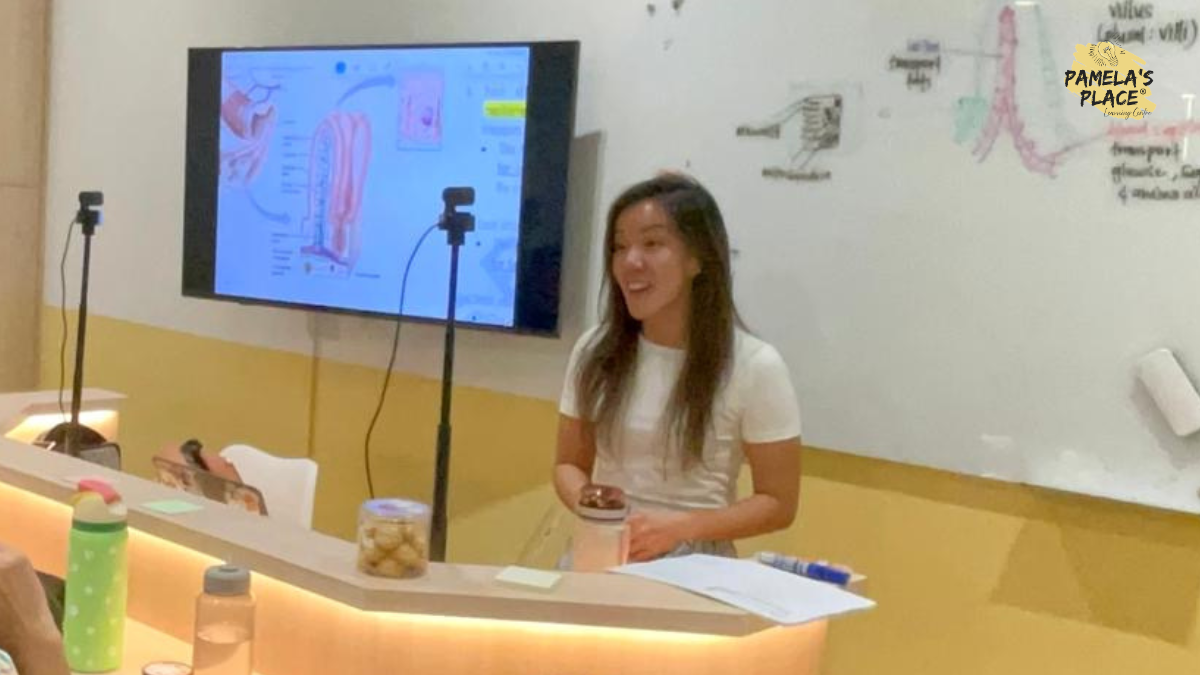
When parents look for a Chemistry or Biology tutor in Singapore, the first question is almost always about results. And results matter — more than 80% of Ms Pamela’s students achieve a distinction, and over 90% improve by at least two grades.
But the second question, and honestly the more important one, is: why does it work?
The answer lies in a teaching philosophy that has been shaped over 12 years, 500+ students, and a genuine belief that the way a student is taught matters just as much as what they are taught.
Why “One Size Fits All” Tuition Fails Most Students
Walk into many tuition centres in Singapore and you’ll find large classes, standardised notes, and a teacher moving at a fixed pace. For students who are already keeping up, this works fine. For everyone else — the student who needs more time on certain concepts, or the one who already understands the basics and needs to be stretched — the standard approach often makes things worse, not better.
Ms Pamela’s core belief is straightforward: every student learns differently, and teaching should reflect that.
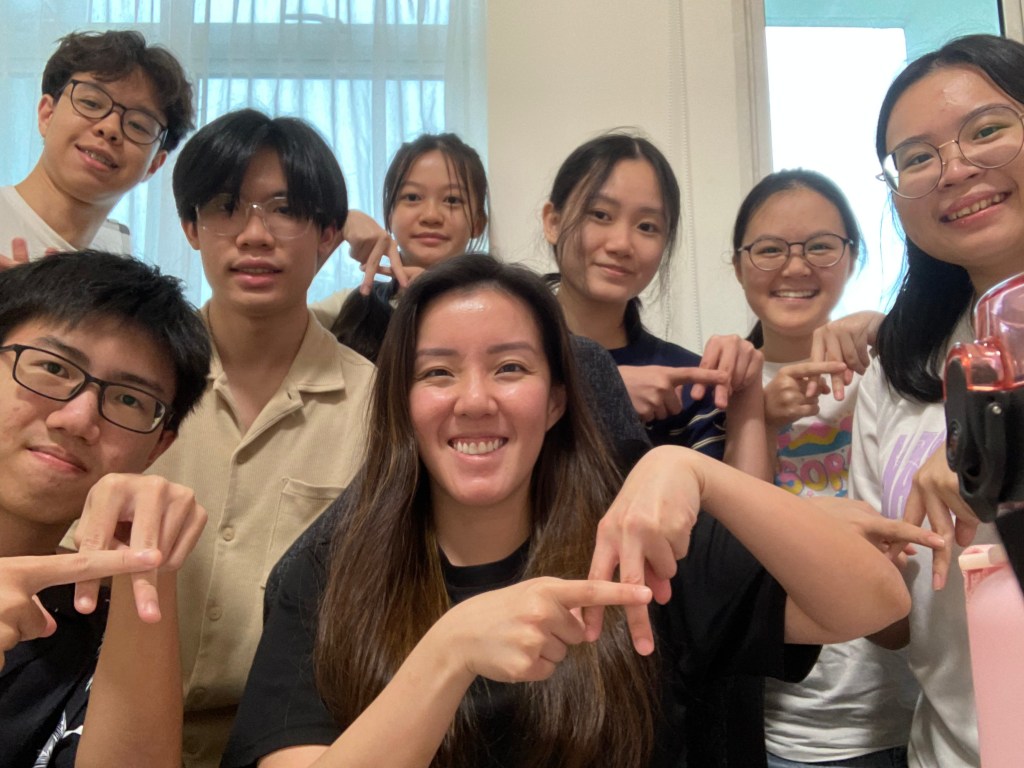
Some students process concepts slowly but deeply. Others grasp ideas quickly but struggle to apply them under exam conditions. Some need structured, step-by-step guidance. Others benefit more from discussion and questioning. Applying the same method to all of them produces inconsistent results.
This is why Pamela’s Place was built around a different model.
The Omakase Small Group Model: Matched, Not Just Grouped
The signature approach at Pamela’s Place is what Ms Pamela calls omakase-styled small group learning — a concept borrowed from Japanese dining, where the chef curates the experience based on what works best for the guest.
Want to find out if Pamela’s Place is the right fit?
Speak to Ms Pamela directly or book a trial lesson — no commitment, no registration fee.
In practice, this means students are not grouped simply by school level or age. They are carefully matched based on:
- Learning pace and processing style
- Conceptual strengths and gaps
- Examination readiness
- Academic goals (O-Level, IP, JC, H1/H2)
The result is a small group where every student is genuinely at the same stage. Lessons move at a pace that makes sense for the group. Questions that come up are relevant to everyone in the room.
This is very different from the typical tuition group where one student is racing ahead while another is still trying to catch up — and the lesson is paced somewhere uncomfortably in between.
If you’re exploring tuition options for your child, this is what makes small group Chemistry tuition and small group Biology tuition at Pamela’s Place a meaningfully different experience.
Active Learning: Why Students Remember More
One of the most common complaints students have after tuition is that they understood everything in class — but couldn’t replicate it during the exam. This gap almost always comes from passive learning: sitting, listening, copying notes.

Ms Pamela structures every lesson around active engagement. Students are regularly:
- Asked to explain concepts back in their own words
- Challenged with questions before the answer is revealed
- Guided through problems in real time, not just shown completed solutions
- Encouraged to ask “why” rather than accept “this is how it works”
This approach matters especially in science subjects. O-Level and A-Level Chemistry and Biology both test application, not just recall. Students who have learned passively often recognise information in a question but can’t use it to construct a strong answer. Students who have engaged actively with concepts tend to perform with far greater consistency.
Cross-Topic Connections: The Skill That Separates A Students from B Students
One of the most reliable patterns Ms Pamela has observed across 12 years of teaching is this: students who struggle with higher-level questions almost always see topics as isolated units. They know their content topic by topic, but when a question draws from two or three different areas of the syllabus — as the harder questions always do — they struggle to connect the dots.
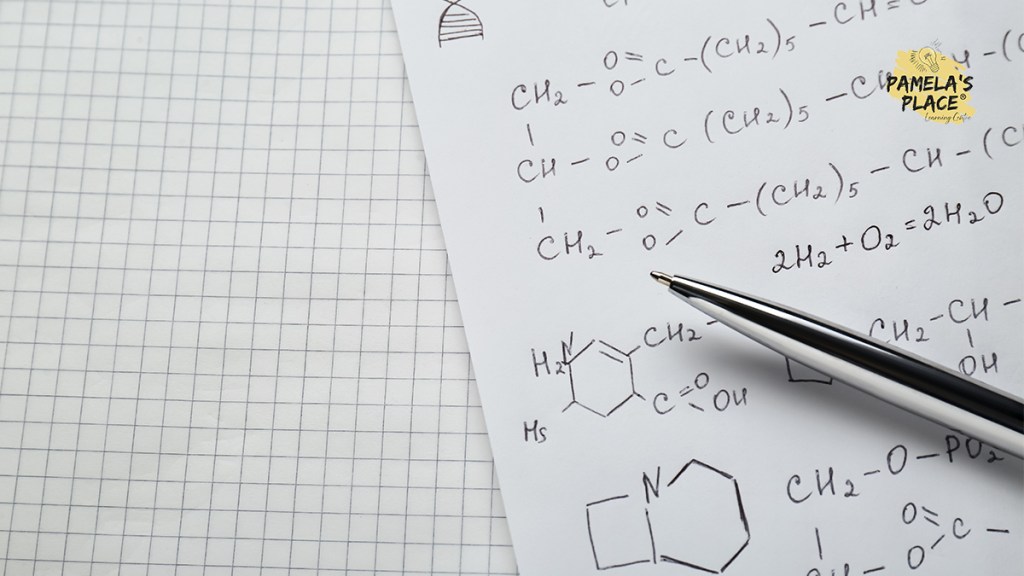
Building cross-topic understanding is a deliberate part of every lesson at Pamela’s Place.
For example, in A-Level H2 Chemistry, topics like energetics, kinetics, and equilibrium are deeply interconnected. A student who understands them separately may still be unable to explain why a reaction is both thermodynamically feasible and kinetically slow. A student who has been taught to see the connections will approach that question with clarity.
This is why H2 Chemistry tuition and H2 Biology tuition at Pamela’s Place specifically incorporates cross-topic referencing — not as an add-on, but as a core teaching strategy.
Examination Skills: Knowing the Content Isn’t Enough
Singapore science examinations — whether at O-Level or A-Level — have very specific expectations. Examiners are looking for precise language, logical structure, and direct answers to the question asked. A student who understands the content but writes vague or poorly structured responses regularly loses marks they should not be losing.
This is the knowing vs. answering gap, and it is one of the most common reasons students plateau at B or C despite understanding the material.
Ms Pamela addresses this directly. Students at Pamela’s Place are taught:
- How to interpret command words (describe, explain, suggest, evaluate)
- How to structure responses for maximum marks
- How to present calculations with correct working and units
- How to avoid the most common mistakes that examiners flag
These skills are integrated into every lesson — not saved for a crash course the week before the exam.
For students preparing for specific examinations, these resources may also be useful:
Building Independent Learners — Not Tuition-Dependent Students
A concern some parents raise is whether tuition creates dependency. It is a fair question. Tuition that simply does the thinking for students can become a crutch rather than a scaffold.
Ms Pamela’s goal is the opposite: to help students develop the skills and confidence to perform independently. Throughout the learning process, students are encouraged to take ownership of their progress, identify their own gaps, and build study habits that sustain them beyond any single examination.
The mark of success is not just a distinction in the final exam — it’s a student who walks into that exam hall knowing exactly what they know, what they can do, and how to handle what they don’t immediately recognise.
About Ms Pamela
Ms Pamela holds a Bachelor’s Degree in Biological Sciences (Biomedicine) and has been teaching O-Level and A-Level Chemistry and Biology in Singapore for over 12 years. She has worked with more than 500 students across Secondary, IP, and JC levels.
Her results speak clearly: more than 80% of her students achieve a distinction, and over 90% improve by at least two grades.
Pamela’s Place is located near King Albert Park MRT, within easy reach of Bukit Timah and nearby schools including Hwa Chong Institution, NJC, and ACS(I).
Key Takeaways
- Ms Pamela teaches Chemistry and Biology across O-Level, IP, and JC (H1/H2) levels
- Students are matched by learning pace and needs — not just grouped by school level
- Lessons prioritise active engagement over passive note-taking
- Cross-topic connections are built into every lesson to prepare for higher-order questions
- Examination techniques — answering structure, command words, mark-scoring strategies — are taught from day one
- The goal is confident, independent learners who perform well consistently — not just before exams
Frequently Asked Questions
1. What subjects does Ms Pamela teach?
Ms Pamela teaches Pure Chemistry and Pure Biology for Secondary 3 and 4 students (O-Level and IP), as well as H1 and H2 Chemistry and Biology for JC1 and JC2 students preparing for the A-Level examinations.
2. What are omakase-styled classes and how are students grouped?
Omakase-styled classes group students according to their learning pace, strengths, and current gaps — not just their school level or age. This ensures lessons are relevant and appropriately paced for every student in the group, making class time significantly more effective.
3. How is tuition at Pamela’s Place different from a typical tuition centre?
Class sizes are kept small (max 7), students are carefully matched rather than randomly grouped, and lessons are built around active participation rather than passive note-copying. Cross-topic connections and examination technique are integrated into every class.
4. Does Ms Pamela teach both Chemistry and Biology?
Yes. Ms Pamela teaches both subjects across O-Level, IP, and JC levels. Students can attend tuition for Chemistry, Biology, or both subjects at Pamela’s Place.
5. What does “active learning” mean in the context of Pamela’s Place lessons?
Rather than listening and copying notes, students are actively questioned, guided through problem-solving in real time, and taught to explain concepts in their own words. This approach improves long-term retention and exam performance.
6. How does Ms Pamela help students who understand the content but still lose marks in exams?
This is known as the knowing vs. answering gap. Students are taught how to interpret command words, structure written responses, present calculations correctly, and avoid common errors that examiners flag — skills that directly translate to better marks.
7. Is Pamela’s Place suitable for IP students?
Yes. Separate programmes are available for IP Chemistry and IP Biology students. The IP syllabus differs from the standard O-Level pathway, and lessons are structured to reflect this.
8. Where is Pamela’s Place located?
Pamela’s Place is located above Beauty World MRT station (Exit D) in the Bukit Timah area, with the Downtown Line providing direct access for students from schools further along the line, including Hwa Chong Institution and National Junior College, Nanyang Girls’ High School, and Methodist Girls’ School.
9. Can I try a class before committing?
Yes. Trial lessons are available for new students with no registration fee. All materials are included.
10. What results have Ms Pamela’s students achieved?
More than 80% of students achieve a distinction, and over 90% improve by at least two grades. Ms Pamela has taught more than 500 students over 12 years.
Read more
Ready to experience a different kind of tuition?
Ms Pamela teaches small group Chemistry and Biology classes for Secondary, IP, and JC students in Bukit Timah. Trial lessons are available with no registration fee.
