Every tuition success story in Singapore starts the same way — not with a distinction, but with a moment of quiet desperation.
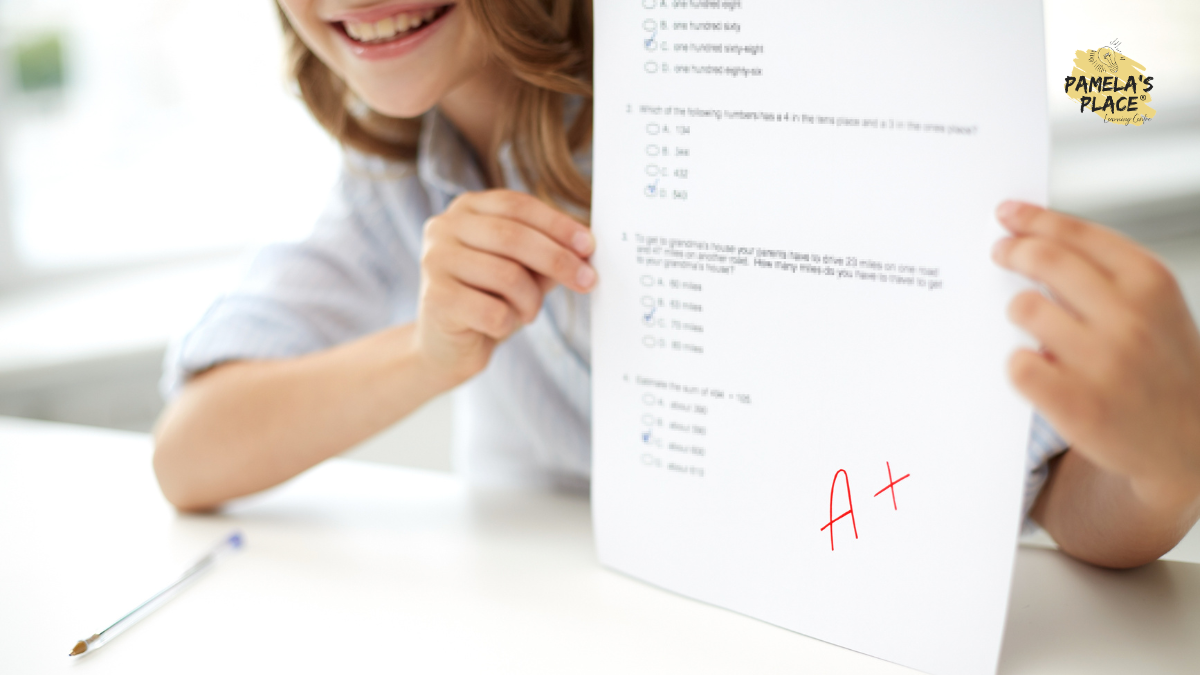
A student staring at a marked paper with a grade that doesn’t reflect how hard they worked. A parent watching their child spend hours at the desk and still come home with a C5. A JC student who aced O-Levels but finds H2 Chemistry suddenly, brutally different from anything they’ve encountered before.
These are the moments that bring students to Pamela’s Place. And what happens after those moments — the turnarounds, the grade improvements, the shifts in confidence — is what this article is about.
Over 12 years and more than 500 students, Ms Pamela has seen nearly every version of struggle. More than 80% of her students go on to achieve a distinction. Over 90% improve by at least two grades. Behind every one of those numbers is a student who turned something around — often from a starting point that felt irreversible.
These are their stories.
Before and After: What Student Transformation Actually Looks Like
The most meaningful chemistry tuition success stories aren’t always the most dramatic grade jumps. Sometimes the transformation is visible in the numbers — E8 to A1, U to A, four grades to distinction. Sometimes it shows up more quietly: a student who finally stops dreading lessons, a parent who notices their child revising without being reminded, a teacher who comments that a student has started contributing in class again.
Both kinds of transformation matter. And both tend to follow a similar arc.
Before tuition, most students share a recognisable set of experiences:
- They study consistently, but results don’t improve — or actively decline
- They understand the lesson when it’s explained, but can’t reproduce that understanding in an exam
- They feel increasingly convinced that Chemistry or Biology simply isn’t a subject they can do
- They’ve stopped asking questions because too many unanswered ones have accumulated

After finding the right support, the change is rarely instant. It happens in layers. First, a concept that’s been confusing for months suddenly makes sense. Then a class test comes back slightly better. Then a weighted assessment shows a clear improvement. Then, the prelims arrive, and the grade is two or three bands higher than the previous year.
This is what genuine biology tuition results and chemistry tuition success look like in practice — not a miracle, but a gradual, compounding process of gap-closing, confidence-building, and skill development that shows up clearly by the time national examinations arrive.
Shannon Ng: IP Chemistry — E8 to A1
Shannon came to Pamela’s Place on the IP track, struggling with Chemistry at a level most students don’t encounter until JC. Her starting grade was an E8 — a result that, on paper, suggested serious foundational problems.
What Ms Pamela found was something slightly different. Shannon understood more than her grade suggested. The problem wasn’t that she lacked ability — it was that she was trying to memorise a subject that requires understanding, and the gaps in her foundational knowledge were making every new topic feel incomprehensible.
The work began with foundations. Chemical bonding, atomic structure, and mole concepts — the topics that underpin almost everything else in the Chemistry syllabus. Once those became stable, Shannon’s ability to follow new material improved dramatically. She wasn’t starting from scratch on every topic anymore. She was building.
The result: A1 in IP Chemistry. A student who had been told, implicitly, by her own grades that Chemistry wasn’t something she could do, discovered it was something she could do well.
“Miss Pamela is constantly testing me on concepts and cross topics during lessons because it helps me to constantly memorise topics consistently throughout the year, so that I can be more fluent with the terms and standard answers instead of having to learn last-minute before exams.” — Shannon Ng
Violet Liaw: H2 Chemistry — U to A
Violet’s story is one of the most striking student improvement stories at Pamela’s Place — not because a U grade is unusual among JC Chemistry students, but because of what that U grade represented.
Violet had performed well at O-Level. She came into JC with reasonable Chemistry foundations and a belief that she could manage. What she encountered in H2 Chemistry was a step-change in difficulty that many JC students are not prepared for — not just harder content, but a fundamentally different kind of question that required integrating knowledge across topics, reasoning about unfamiliar scenarios, and expressing complex understanding in precise, structured language.
Her U grade wasn’t a reflection of insufficient effort. It was a reflection of a mismatch between the approach that worked at O-Level — careful note-taking, topic-by-topic revision, pattern recognition — and the approach required at H2 level, which demands genuine conceptual flexibility.
Ms Pamela restructured Violet’s approach from the ground up. Content knowledge wasn’t the priority — it was adequate. The work focused on cross-topic connections, the logic behind chemical principles rather than the memorisation of them, and the specific language precision that H2 Chemistry marking schemes require.
The result: A in H2 Chemistry. A complete grade reversal from the entry point.
“Ms Pamela was really effective in her teaching as she kept drilling the key content, going through questions in class, and was able to explain the concepts in many ways. She was also responsive on text and quick to give detailed explanations, a testament to her dedication.” — Violet Liaw
The Student Who Joined in Mid-June: E8 to Distinction
One of the most consistent questions parents ask is: Is it too late? Usually, they’re asking because something has already gone wrong — prelims are approaching, or results have just come back worse than expected, and they’re wondering whether support at this stage can make any meaningful difference.
The answer, in most cases, is yes — but the approach has to change.
One student joined Pamela’s Place’s intensive Chemistry revision programme in mid-June, just months before the O-Level examinations. Their E8 in Prelim 1 didn’t leave much room for a conventional rebuilding approach. There was no time to work through the syllabus topic by topic.
Instead, Ms Pamela focused on the highest-leverage gaps — the foundational misconceptions that were causing errors across multiple question types — and on drilling examination technique intensively. The student didn’t need to know more. They needed to be able to use what they knew more effectively, and to stop making the presentation errors that were costing marks on questions they fundamentally understood.
By Prelim 2: B4. In the national O-Level examination: distinction.
“Concise notes and clear explanations when I’m clearing my doubts. Even though I joined the Chemistry tuition extremely late (mid June), it was extremely helpful as I improved greatly from E8 in Prelim 1 to B4 in Prelim 2 and got a distinction in O-Levels.” – Darice Wong
This story matters for parents who are reading it in Term 3 or Term 4, wondering whether the window has closed. It hasn’t — but earlier is always better.
The Student Who Learned to Love Chemistry
Not every student improvement story is measured in grade bands. Some of the most meaningful chemistry tuition success outcomes involve a shift in a student’s relationship with the subject itself.
One student came to Pamela’s Place having developed a genuine aversion to Chemistry — finding it confusing, frustrating, and pointless. They completed assignments because they had to, not because anything had clicked. Their grades reflected this disconnection: adequate, but never more.
“She made me love Chemistry and Mathematics a lot as I improved by 4 grades to distinction. Her answering techniques are very applicable, and I improved a lot when I’m with her.” – KaiLe
Four grades to distinction is a significant result. But the more durable outcome — the one that continues to matter after the O-Level certificate is filed away — is the shift from avoidance to engagement. Students who learn to find meaning in a subject they once hated carry that capacity for engagement into every subject, every challenge, every learning environment they’ll encounter afterwards.
The Student Who Needed Biology to Make Sense
Biology tuition results at Pamela’s Place follow a similar pattern to Chemistry, but Biology presents its own specific challenges. It’s one of the most content-heavy subjects in the Singapore curriculum, and the common student approach — memorise everything, reproduce it under exam conditions — works just well enough at lower levels to create a false sense of security before it collapses at O-Level or H2.
One student came in struggling with Biology structured questions, specifically. She understood the content when reading it. She could explain processes verbally. But her written answers consistently lost marks — either too vague, missing the specific keywords the mark scheme required, or structured in a way that didn’t match what examiners were looking for.
“She taught skills to organise the points before writing out the essay question, which was systematic and made the question seem less challenging. I feel I could think more independently and be able to handle questions during examinations. Never regretted joining her biology tuition!” – Amelia
This is the knowing vs. answering gap in Biology form — and it’s just as fixable as it is in Chemistry, once a student is taught the specific skills required to express biological understanding in the language and format the exam rewards. Our post on how to improve Biology grades covers the study and answering strategies that complement this kind of structured tuition.
What These Stories Have in Common
Reading these student improvement stories together, a consistent pattern emerges. The students who make the most significant transformations at Pamela’s Place typically share three characteristics at the point they arrive:
- They have more ability than their grades suggest. The gap between what they understand and what they can demonstrate under exam conditions is the primary problem — not raw academic capability.
- They’ve been studying the wrong way. Re-reading notes, memorising without understanding, revising topics in isolation — these approaches create an illusion of preparedness that collapses when faced with application questions.
- They need someone to identify the specific problem. Not more content, not more hours — a precise diagnosis of what’s going wrong and targeted support to fix it.
This is why the trial lesson at Pamela’s Place is designed the way it is. Ms Pamela doesn’t just place a new student in a class and begin teaching. She observes how they think, where they hesitate, and what kind of errors they make — before making any recommendation about what they need. Read more about how the trial lesson process works and what to expect before you commit.
For Parents: What to Look for as Progress Unfolds
One of the most common questions from parents whose children have just started tuition is: ” How do I know if it’s working?

The answer is rarely visible immediately in grades, particularly if your child has just started. The early signs of genuine progress tend to be behavioural before they become numerical:
- Your child starts revising Chemistry or Biology without being reminded
- They come home from a lesson with a specific question they want to look up
- They stop expressing dread before Chemistry tests
- They mention something they finally understand that had been confusing for a long time
- Their school teacher notices increased participation or improved written work
These behavioural signals almost always precede the grade improvements. If you’re seeing them, the process is working — even if the report card hasn’t caught up yet.
For a deeper look at how to evaluate whether tuition is genuinely helping your child, the guide on how to choose Biology tuition in Singapore covers the indicators that distinguish meaningful progress from surface-level activity.
Every Student’s Story Is Different — The Starting Point Isn’t the Ending Point
The common thread across every chemistry tuition success story and biology tuition result at Pamela’s Place is not a particular grade or a particular school. It’s a student who arrived at a point of difficulty — whether that was a U grade, an E8, a persistent C, or simply a growing gap between effort and results — and left in a meaningfully different position.

Some of those students improved dramatically in a short time. Others improved steadily over the course of a full academic year. Some came in close to national exams and made the most of the remaining preparation time. Others started early and built the kind of deep, durable understanding that sustained them through JC and beyond.
What they have in common is that the starting point — however discouraging it felt at the time — was not the ending point.
If your child is at one of those starting points right now, the most useful thing you can do is find out precisely what’s going wrong — not guess, not wait for the next set of results, but get a clear diagnostic picture of where the gaps are and what kind of support will actually close them.
That’s what the trial lesson is for. Read student reviews and results on the success stories page, and when you’re ready, book a free trial lesson — no registration fee, all materials included.
Key Takeaways
- Over 80% of Pamela’s Place students achieve a distinction; over 90% improve by at least two grades
- Real documented results include E8 to A1 in IP Chemistry, U to A in H2 Chemistry, and E8 to distinction in O-Level Chemistry
- The most common pattern: students have more ability than their grades suggest — the problem is method and exam technique, not raw capability
- Early signs of progress are behavioural before they’re numerical — watch for changed attitudes and habits before expecting grade movement
- The knowing vs. answering gap is the single most common and fixable problem across both Chemistry and Biology
- The trial lesson is designed to diagnose specifically what’s going wrong — not just place a student in a class
Ready to Start Your Own Story?
Whether your child is at a U, an E8, a C5, or a B3, that should be an A — the right support, applied at the right moment, changes outcomes.
Ms Pamela teaches small group Chemistry and Biology tuition for Secondary, IP, and JC students near King Albert Park MRT in Bukit Timah. Classes are capped at 4 to 6 students. Trial lessons are free — no registration fee, all materials included.
Frequently Asked Questions
1. Are the success stories on this page from real Pamela’s Place students?
Yes. All named students and quoted reviews are from real students who have studied at Pamela’s Place. Full testimonials are available on the success stories page.
2. Can a student really go from a U or E8 to a distinction?
Yes — though the timeline and outcome depend on the starting point, how early support begins, and how consistently the student works outside of lessons. Students who arrive with weak foundations but a strong work ethic often produce the most significant turnarounds
3. How long does it typically take to see improvement in Chemistry or Biology?
Most students see changes in school assessments and class tests within the first 4–8 weeks. Significant grade movement — two or more grades — typically becomes visible by the mid-year or preliminary examination period.
4. What is the knowing vs. answering gap?
It’s the mismatch between a student’s conceptual understanding and their ability to express it correctly under exam conditions. It typically shows up as losing marks on questions that the student feels they understood. It’s one of the most common and fixable issues addressed in both Chemistry and Biology tuition at Pamela’s Place.
5. My child is already close to their O-Level exam. Is it too late to start tuition?
No, but the approach changes. Rather than comprehensive rebuilding, the focus shifts to closing the highest-impact gaps and drilling exam technique intensively. Ms Pamela’s June and September/October crash courses are specifically designed for students in this position.
6. Does Pamela’s Place offer tuition for IP students as well as O-Level and JC students?
Yes. Dedicated IP Chemistry tuition and IP Biology tuition are available for Integrated Programme students in Upper Secondary.
7. How do I know if Pamela’s Place is the right fit before committing?
The trial lesson is the most reliable way to find out. It runs as a genuine class — not a showcase — so you and your child experience exactly what ongoing tuition looks like before making any decision. Book here →
