
Exams are days away and your notes are still half-covered. It’s a situation most Singapore students know well — and one that feels a lot worse than it needs to be.
Here’s the truth: last minute revision can still make a real difference. Not if you panic and try to re-read every chapter, but if you’re strategic about what you revise, how you revise, and how you spend each hour you have left.
This guide gives you a clear, practical approach to last minute exam revision — built specifically for students preparing for O-Level, A-Level, and JC examinations in Singapore.
Why Last Minute Revision Actually Works (When Done Right)
There’s a difference between cramming and strategic last-minute revision.

Cramming means trying to absorb as much information as possible in a short time, without structure or direction. It tends to create surface-level familiarity that breaks down quickly under exam pressure.
Strategic last-minute revision means identifying what you already know, strengthening it, and closing the most critical gaps — in the time you have left.
At this stage, you’re not learning biology or chemistry from scratch. You’re reinforcing what’s already there. That distinction matters, because it changes how you allocate your time and which methods you use.
Step 1: Prioritise Before You Open a Single Textbook
The biggest mistake students make in the final days before exams is trying to revise everything equally. This guarantees that nothing gets revised deeply enough.
Start by sorting your topics into three categories:
Strong — concepts you understand well and can answer confidently in exam conditions
Shaky — topics you know in theory but struggle to explain or apply clearly
Weak — areas you’ve barely covered or consistently get wrong
Your revision time should go almost entirely to the shaky category. Strong topics need a quick pass at most. Weak topics, if they’re minor, may not be worth the time investment at this stage — focus on what’s most likely to be tested and what will give you the highest return per hour.
For O-Level Biology and Chemistry students, this often means prioritising high-frequency topics like cell biology and transport processes or acids, bases, and organic chemistry — topics that appear consistently across past-year papers.
Step 2: Use Active Revision, Not Passive Reading
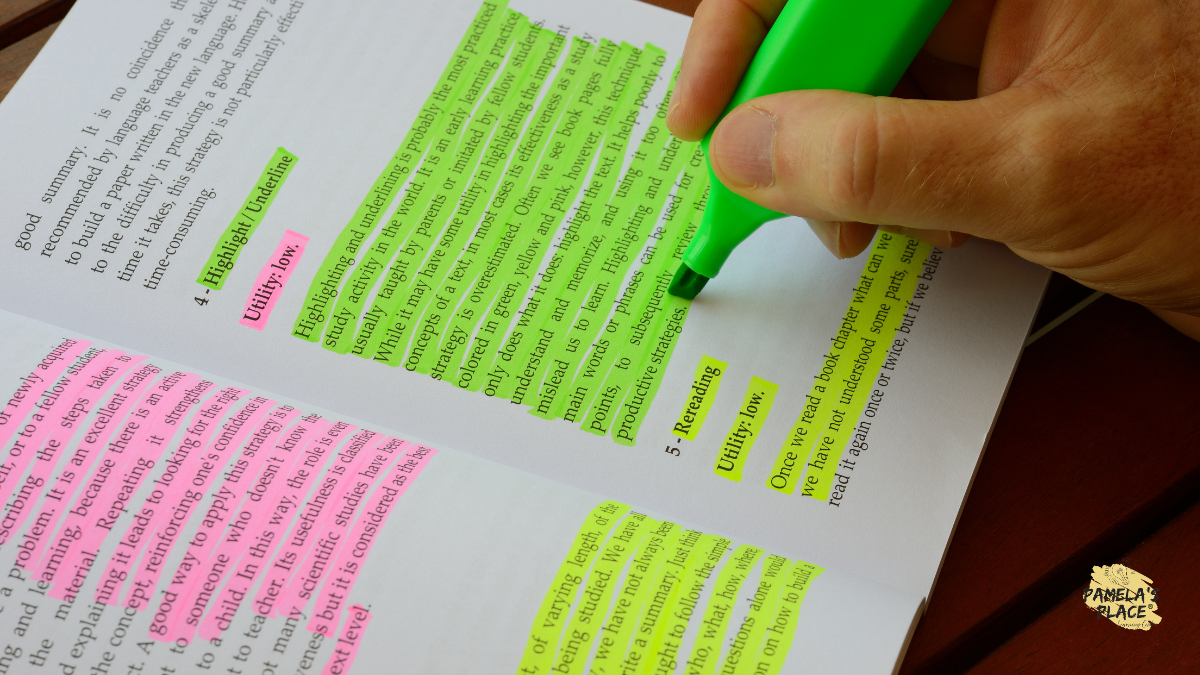
Re-reading your notes feels productive. It isn’t.
When you re-read, your brain recognises information passively — it feels familiar, which creates a false sense of confidence. But recognition is not recall. And in exams, you need to recall.
Active revision forces your brain to retrieve information without looking at it. This is what actually builds memory and exam readiness.
Effective active revision methods:
Self-testing. Cover your notes and try to recall key concepts from scratch. Check what you got right, and immediately revisit what you missed.
Past-year questions. Attempt exam-style questions under timed conditions. For SEAB O-Level and A-Level papers, past questions are your best indicator of what’s tested and how answers should be structured. You can explore structured question techniques in our guide on how to score full marks in Biology structured questions.
Topic summaries. Condense each topic into a single page of key points — definitions, processes, diagrams, and commonly tested applications. This forces you to think about what’s essential rather than what’s just familiar.
Mistake review. Go back through marked assignments, practice papers, and test scripts. Look for recurring errors. In Biology and Chemistry, these are often about precision — vague explanations, missing keywords, or answers that explain the right idea in the wrong way.
Step 3: Structure Your Remaining Time Realistically
With limited days left, a realistic schedule matters more than an ambitious one.

Don’t write a revision plan that requires 10 hours of focused study per day — you won’t stick to it, and the pressure of falling behind will make things worse.
Instead:
- Block out 3–4 focused study sessions per day of 45–60 minutes each
- Assign each session to a specific topic or paper — not a vague “study Biology”
- Build in 15-minute breaks between sessions to let information consolidate
- Reserve one session per day for practice questions, not just notes
This kind of schedule is sustainable, and it produces better retention than marathon sessions that drag on until midnight.
The Pomodoro method — 25 minutes of focused study, 5-minute break, repeat — works well for students who struggle to sustain concentration. The key is staying completely off your phone during the 25 minutes. Even a single notification can break the focus you’ve built.
Step 4: Focus on Answering Technique, Not Just Content
One of the most overlooked aspects of last-minute exam prep is answering technique.
In Singapore’s O-Level and A-Level science exams, many marks are lost not because students don’t know the content — but because they don’t present their answers correctly. This includes not using precise biological or chemical terminology, giving vague explanations instead of specific ones, or structuring a multi-step answer in the wrong order.
Spend part of your revision time specifically on this. Look at marking schemes for past-year papers and compare your answers against them. Ask yourself: where exactly did I lose marks, and why?
Common answering mistakes in Biology include explaining processes without linking cause and effect, or using everyday language where scientific terms are expected. In Chemistry, students often lose marks by giving incomplete equations, missing state symbols, or explaining reaction mechanisms without the required level of precision.
Understanding what examiners are actually looking for is a skill — and it’s one you can sharpen significantly in a short period of time.
What Not to Do in the Final Days Before Exams
Knowing what to avoid is just as valuable as knowing what to do.
Don’t start new topics. If you haven’t covered a topic yet, attempting to learn it from scratch in the final days is rarely worth the time. The risk of confusion and added stress outweighs the potential gain.
Don’t revise passively for hours. Long stretches of reading without active engagement create the illusion of revision without the results. Two focused hours of self-testing beats six hours of rereading.
Don’t neglect sleep. Sleep is when memory consolidates. Staying up until 3am the night before an exam actively reduces your ability to recall information the next day. A well-rested brain outperforms a exhausted one that revised for an extra two hours.
Don’t compare your revision to others. What your classmates are doing in the final week is rarely useful information. Focus on your plan.
The Night Before: What Actually Helps
The night before an exam is not the time for intensive revision. It’s the time to consolidate and settle.
Do a light review of your topic summaries — the single-page condensed notes you prepared earlier. Glance through key definitions, diagrams, and any commonly tested processes. This primes your memory without overloading it.
Complete one final check of your exam logistics: where the venue is, what time you need to leave, what stationery you need. Small practical details that are stressful to think about on the morning itself.
Sleep at a reasonable time. Eat a proper meal. These aren’t clichés — they’re the things that give you the mental clarity to perform on the day.
Key Takeaways
- Last-minute revision works when it’s strategic — focus on shaky topics, not everything equally
- Active revision (self-testing, past questions, mistake review) is far more effective than re-reading
- Exam technique matters as much as content — know what the marking scheme expects
- Sustainable revision schedules with focused sessions beat marathon cramming
- The night before is for consolidation, not new learning
Struggling with Biology or Chemistry heading into exams? At Pamela’s Place, our lessons are structured to improve both conceptual understanding and exam answering technique — so students are better prepared when it counts.
Explore our Biology tuition | Explore our Chemistry tuition
WhatsApp: +(65) 9151 0956
Frequently Asked Questions
1. Can last-minute revision actually improve exam results?
Yes — when it’s focused and strategic. Students who use their remaining time to target high-frequency topics, practise past questions, and review answering techniques consistently perform better than those who either cram indiscriminately or give up on revision entirely.
2. How many hours should I revise the day before an exam?
Most students benefit from 3–5 hours of focused revision the day before, broken into sessions with short breaks. Anything beyond that tends to produce diminishing returns, especially when it comes at the cost of sleep.
3. Should I do past-year papers or review notes in the final days?
Both, but in a specific order. Use notes to consolidate key concepts first, then switch to past-year papers to apply what you know under exam conditions. Reviewing your answers against marking schemes is where the real improvement happens.
4. What topics should I prioritise for O-Level Biology last-minute revision?
Focus on high-frequency topics: cell biology, transport in plants and animals, respiration and photosynthesis, and human physiology. These appear consistently across past papers and carry significant marks. Our O-Level Biology tuition programme covers these systematically throughout the year.
5. Is it worth staying up late to revise the night before?
No. Sleep is critical for memory consolidation. Students who sleep well before exams typically recall information more reliably than those who stayed up late for extra revision. A well-rested mind under exam conditions outperforms a tired one almost every time.
6. How do I stop panicking and actually start revising?
Start with your strongest topic for 20–30 minutes. The act of beginning — and experiencing early success — reduces anxiety and builds momentum. Having a written plan for the day also helps, because it removes the mental overhead of deciding what to do next.
7. What’s the most effective quick revision technique?
Self-testing. Cover your notes, write down everything you can recall about a topic, then check what you missed. This one method — done consistently — builds stronger memory than any amount of passive reading.
