

Organic chemistry A Level is one of the most challenging and important components of the JC Chemistry syllabus. Many students find organic chemistry difficult because it involves multiple reaction pathways, abstract mechanisms, and large volumes of content. Without strong conceptual understanding, it can quickly become overwhelming and confusing.
A Level organic chemistry explained properly focuses not on memorizing reactions but on understanding how and why reactions occur. When students grasp the logic behind functional groups, reaction conditions, and mechanisms, organic chemistry becomes more structured and manageable.
At Pamela’s Place, we focus on helping students build strong foundations in organic chemistry so that they can apply concepts confidently and perform well in exams.
Master Chemistry with Confidence
Everything you need to score higher in O Level & A Level Chemistry—from exam tips to study strategies.
What Makes Organic Chemistry Difficult
One reason students struggle with organic chemistry A Level is the sheer number of reactions involved. From alkanes and alkenes to alcohols, carboxylic acids, and esters, students are required to remember reaction conditions, reagents, and products across multiple topics.
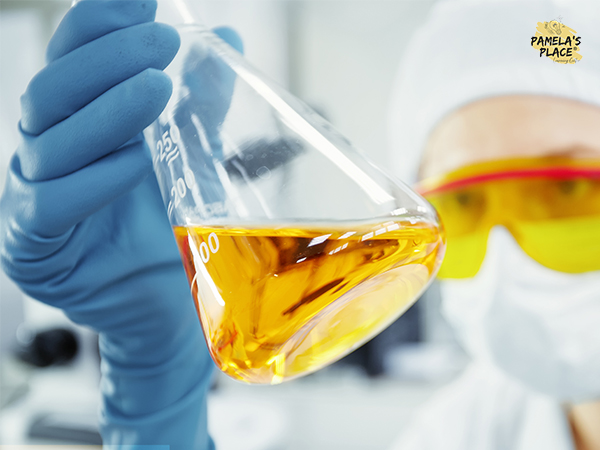
H2 organic chemistry topics also require students to integrate knowledge across chapters. A reaction learned in one topic may appear again in a different context, often combined with unfamiliar conditions. Without proper understanding, students rely solely on memorization, which leads to confusion and mistakes.
A Level organic chemistry explained in a systematic way helps students see patterns rather than isolated reactions. When reactions are grouped by functional groups and reaction types, it becomes clearer, more logical, and less intimidating.
Understanding Functional Groups

Functional groups form the backbone of organic chemistry at the A Level. They determine how molecules behave and how they react under different conditions. Students must recognize functional groups such as alkenes, halogenoalkanes, alcohols, aldehydes, ketones, carboxylic acids, and amines.
Organic chemistry for beginners often starts with learning functional groups and basic naming rules. However, at A Level, students are expected to go beyond recognition and explain reaction pathways and mechanisms in detail. A Level organic chemistry explained through functional groups helps students predict reactions instead of memorizing them. When students understand how functional groups influence reactivity, they can approach organic chemistry reactions A Level better.
Organic Chemistry Reactions and Patterns

Organic chemistry reactions A Level can be grouped into several common types, including addition, substitution, elimination, oxidation, and reduction. Recognizing these patterns is essential for mastering the subject.
Many students struggle because they see each reaction as separate. In reality, most A Level chemistry organic reactions follow similar principles. For example, alkenes commonly undergo addition reactions, while alcohols undergo oxidation and substitution reactions.
By identifying reaction types, students can simplify it into a smaller set of core principles, which reduces cognitive load and improves recall during exams.
We focus on teaching reactions as interconnected systems rather than isolated facts. This approach allows students to build a coherent understanding of organic chemistry.
Understanding Organic Chemistry Mechanisms

Organic chemistry mechanisms are one of the most heavily tested components in A Level exams. Students are required to draw step-by-step electron movement using curly arrows and explain how reactions occur at the molecular level.
Many students find mechanisms difficult because they lack proficiency in electron flow and bonding concepts. A weak understanding of acids and bases often contributes to this difficulty, as proton transfer and electron movement underpin many organic reactions. Students who struggle with these fundamentals can refer to our guide on how to tackle acid–base questions effectively to strengthen their core chemistry concepts.
A Level organic chemistry explained through mechanisms helps students develop deeper insight into chemical behavior. When students understand how electrons move, they can predict products and explain reaction outcomes logically.
Mechanisms also help students deal with unfamiliar questions, which are increasingly common in H2 organic chemistry topics. Instead of panicking, students can apply fundamental principles to solve new problems.
Common Mistakes in Organic Chemistry

These mistakes often occur because students rely too much on memory rather than logic. Organic chemistry revision notes should focus on understanding rather than listing reactions.
There are several common errors students make in organic chemistry at the A Level. These include:
- Memorising reactions without understanding conditions
- Mixing up reagents for similar reactions
- Drawing incorrect mechanisms
- Writing incomplete explanations for reaction pathways
At Pamela’s Place, we train students to identify and correct these mistakes early through guided practice and constructive, detailed feedback, which builds confidence and reduces careless errors in exams.
How to Revise Organic Chemistry Effectively
Organic chemistry revision notes should be organized by functional groups and reaction types. This allows students to see patterns and connections between topics.
Effective revision for organic chemistry A Level includes:
- Practicing organic chemistry reactions A Level regularly
- Redrawing organic chemistry mechanisms from memory
- Summarizing reaction conditions and reagents
- Attempting past year A Level chemistry organic reactions
Students are encouraged to use active recall rather than passive reading. Testing oneself through questions strengthens understanding and improves long-term retention.
Exam Techniques for Organic Chemistry
Strong exam performance in organic chemistry A Level depends on more than content knowledge. Many students lose marks due to mistakes ranging from poor structure or unclear explanations.
A Level organic chemistry explained in exam terms focuses on:
- Understanding command words such as “describe,” “explain,” and “suggest.”
- Writing concise but complete answers
- Drawing clear and accurate mechanisms
- Using correct chemical terminology
Organic chemistry mechanisms must be labelled properly, and reaction conditions must be stated clearly. Examiners reward logical reasoning and precise explanations.
At Pamela’s Place, exam techniques are integrated into every lesson so that students learn how to apply knowledge effectively under time pressure.
Why Students Need Structured Support
Organic chemistry A Level requires consistent practice and expert guidance. Many students feel lost when studying independently because they cannot identify which concepts are most important. A structured learning approach makes a significant difference, and our chemistry tuition guide explains how targeted lessons, guided practice, and consistent feedback help students stay on track and improve steadily.
H2 organic chemistry topics are cumulative, meaning gaps in understanding early on will affect later topics. Without structured support, students struggle to keep up.
With proper guidance, A Level organic chemistry, when explained systematically, becomes easier to grasp. Students learn how to connect concepts, apply mechanisms, and answer questions accurately.
What Makes a Strong Organic Chemistry Student
Strong students who perform well in organic chemistry A Level usually share similar habits. They understand functional groups, recognize reaction patterns, and practice mechanisms regularly.
They understand why reactions occur, how electrons move, and how conditions affect outcomes. With the right approach, organic chemistry becomes less about memorizing hundreds of reactions and more about understanding a logical system.
Frequently Asked Questions
1. Why is organic chemistry difficult at A Levels
Organic Chemistry A Level is challenging because it involves many reactions, mechanisms, and concepts that must be understood and applied together.
2. How can I improve my organic chemistry
Improvement comes from strengthening basic concepts and practicing application regularly. If you need help building foundational knowledge, our O-Level Chemistry Tuition program provides structured lessons and problem-solving support to boost understanding.
3. Are mechanisms really that important
Focus on understanding functional groups, practise organic chemistry reactions A Level regularly and revise mechanisms consistently. For structured support, you might consider our H2 Chemistry Tuition page, which explains how advanced lessons help strengthen conceptual understanding and exam confidence.
4. Should I memorise all reactions
Memorization alone is not enough. A Level organic chemistry explained through logic and patterns is more effective.
5. When should I start revising organic chemistry
Start early and revise consistently to avoid last-minute cramming and confusion. Students often benefit from enrolling in chemistry tuition at Pamela’s Place to receive guided practice and targeted feedback tailored to their syllabus needs.
