

Acid-base questions is one of the most tested and important components of the O Level Chemistry syllabus. From basic definitions to calculations involving pH and titration, O-Level acid-base chemistry requires both conceptual understanding and strong application skills. Many students struggle not because the topic is inherently difficult, but because they lack clarity in fundamentals.
At Pamela’s Place, we focus on acid base chemistry explained in a structured way, helping students understand the logic behind reactions and apply concepts confidently in acid base exam questions. With the right approach, students can master this topic and avoid unnecessary mistakes that cost them valuable marks.
Understanding Acid-Base Chemistry

To handle acid base questions O Level chemistry effectively, students must first understand the core concepts. Students can’t just memorise definitions of acids and bases. Students are expected to know how they behave in aqueous solutions, how they react with different substances and how these reactions are represented chemically.
Master Chemistry with Confidence
Everything you need to score higher in O Level & A Level Chemistry – from exam tips to study strategies.
O Level acid base chemistry covers topics such as strong and weak acids, alkalis, neutralisation reactions, salts, and indicators. Many students make common acid base mistakes during O Levels by misunderstandings lead to errors in both structured and calculation questions.
At Pamela’s Place, acid base chemistry explained through simple models and visual representations helps students grasp abstract ideas such as ionisation and dissociation, making the topic easier to comprehend and apply during exams.
Mastering the pH Scale
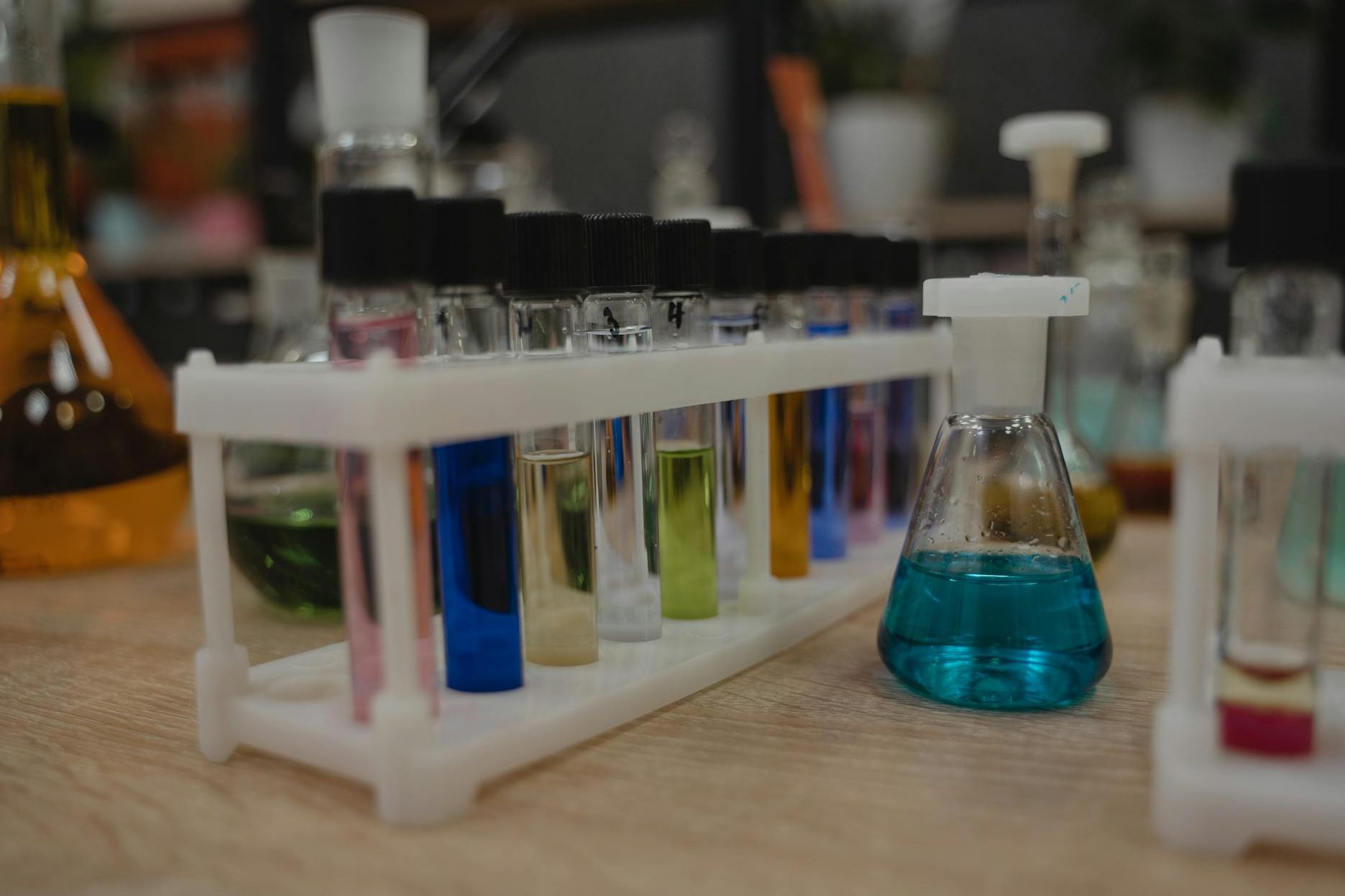
The pH scale O Level chemistry is a key concept that appears frequently in acid base exam questions. Students must understand how pH reflects the concentration of hydrogen ions and how changes in pH affect chemical behaviour.
Many acid base questions O Level chemistry test students on interpreting pH values, predicting reaction outcomes, and comparing acidity or alkalinity. A common mistake is treating the pH scale as linear, when it is actually logarithmic. This leads to incorrect conclusions about relative strength.
Strong understanding of acid base chemistry includes knowing how pH changes during dilution, neutralization, and titration. Students who master the pH scale can answer questions more confidently and accurately.
Handling Acid-Base Titration Questions
Acid base titration O Level is one of the most important application topics, which test not just calculation skills, but also understanding of experimental procedures and data interpretation.
Acid base questions often require students to calculate unknown concentrations, identify end points and explain experimental steps. Many students lose marks by memorising formulas without understanding the underlying concepts.
At Pamela’s Place, O Level chemistry answering techniques for titration focus on clear working, correct units and logical explanation. Students learn how to approach titration questions systematically, ensuring they do not skip steps or misinterpret data.
Explained through practical examples, understanding acid base chemistry helps students see how theory applies to real experiments.
Common Mistakes in Acid-Base Questions
In acid base questions O Level chemistry, marks are often lost due to poor structure rather than lack of knowledge. Students may know the answer but fail to explain it clearly or use the correct terminology.
Common acid base mistakes O Level are a major reason students underperform in this topic. These include:
- Confusing strong and weak acids
- Mixing up concentration and volume in calculations
- Writing vague explanations without linking to chemical principles
- Misinterpreting titration curves and indicators
O Level acid base chemistry requires precise language. Words like “dissociate,” “ionize,” and “neutralize” must be used correctly. At Pamela’s Place, students are trained to avoid common acid base mistakes at the O Level by practicing structured explanations and receiving detailed feedback.
Applying Answering Techniques
Strong performance in acid base exam questions depends heavily on answering technique. Many students struggle not because they do not understand acid base chemistry explained in lessons, but because they do not know how to present their answers.
O Level chemistry answering techniques focus on understanding command words such as “explain,” “describe,” and “calculate.” Students must learn how much detail is required and how to structure responses logically.
For example, when explaining why an acid is strong, students should link it to the degree of ionization rather than simply stating its name. Acid base questions O Level chemistry reward reasoning, not memorization.
By training students to unpack questions, identify key information, and respond systematically, it helps students improve clarity and accuracy in O Level acid base chemistry answers.
Exam Preparation and Revision
Effective revision is critical for mastering acid base questions O Level chemistry. Simply re-reading notes is not enough. Students need active practice, exposure to a variety of question types and consistent feedback.
O Level acid base chemistry revision should include:
- Regular practice of acid base exam questions
- Reviewing common acid base mistakes O Level
- Testing understanding of the pH scale O Level chemistry
- Practicing titration calculations and explanations
At Pamela’s Place, chemistry revision tips focus on spaced practice and active recall. Students are encouraged to test themselves with questions instead of passively reading content, which strengthens long-term memory and builds confidence.
Why Students Struggle With Acid-Base Topics
Many students find acid base questions O Level chemistry challenging because the topic combines theory, calculation and practical skills. Without strong foundations, students feel overwhelmed by the question types.
O Level acid base chemistry also requires students to integrate multiple concepts such as chemical equations, ionisation and experimental data. Weak understanding in any one area leads to confusion and mistakes in others.
This is why structured tuition is important. We explain acid base chemistry in a step-by-step manner, which allows students to see connections between concepts and apply them effectively.
What Makes a Strong Acid-Base Student
Students who perform well in acid base questions O Level chemistry usually share certain habits. They understand concepts deeply, practise regularly and apply proper answering techniques.
Strong understanding of why reactions happen, how calculations work and how experimental data should be interpreted, and not just by memorisation. O Level acid base chemistry becomes manageable when students approach it logically and with the right guidance, students learn how to avoid common acid base mistakes, apply O Level chemistry answering techniques correctly and perform confidently in exams.
Frequently Asked Questions
1. Why are acid-base questions so important in O Level chemistry
Acid-base topics appear frequently and form the foundation for many other chemistry concepts, making them essential for overall exam performance.
2. What are the most common mistakes students make in acid-base questions
Common acid-base mistakes O Level includes confusing strength with concentration, skipping calculation steps, and giving vague explanations.
3. How can I improve in acid-base titration questions
Practice regularly, show clear working, understand the experimental process, and apply proper O Level chemistry answering techniques.
4. Is the pH scale difficult to understand
The pH scale O Level chemistry becomes easier once students understand it is logarithmic and linked to hydrogen ion concentration.
5. When should I start revising acid-base topics
Start early and revise consistently to build strong foundations and avoid last-minute cramming before exams.
